Renew Rebuild Hawaii’s Blog
current events, green initiatives, and hot topics
Will AES produce Green Hydrogen in Hawaii ?

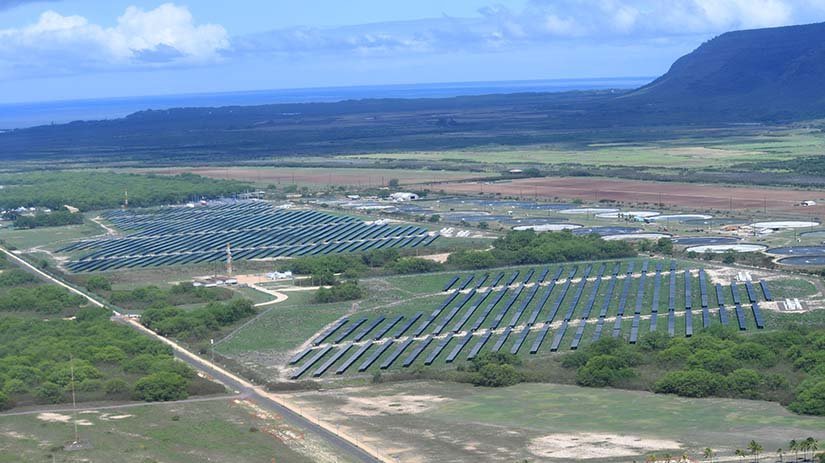
AES solar farm at PMRF missile range on the Island of Kauai - US Navy photo
AES Corporation is widely recognized as one of the most innovative developers of renewable energy in the world. Their cutting-edge technology has earned them more than 7 Edison Awards for innovation. In Hawaii, they revolutionized energy production on the Island of Kauai at the Pacific Missile Range Facility (PMRF) at Barking Sands and at Lawai Solar Farm with the Kauai Island Utility Cooperative (KIUC). Their technology making use of former sugar plantations has been so successful its combination of solar panels and batteries now produces enough base energy to supply 11% of the island's entire power needs and 40% of the power needed it uses at night. On many days in Kauai, there is no reason for KIUC to use its diesel generators at all.
They have also developed a revolutionary pump hydro system that repurposes old sugar plantation reservoirs and uses them as a new kind of battery. The company uses an energy mix of solar farms and batteries, hydropower from the Waimea River, and biomass burning in its renewable energy mix. Because of these innovations, KIUC is said to be more than 10 years ahead of the rest of the state in reaching Hawaii’s clean energy goals. The combination of power produced, battery storage, and electronically controlled grid communication is so advanced that AES is recognized as a world leader.
AES recently announced that together with the Air Products Company, the company is investing $4 billion in Texas to develop the world’s largest green liquid Hydrogen plant. The new facility is intended to provide green hydrogen to the US trucking industry on a massive scale. The electrolyzer plant they are building in Wilbarger County Texas is designed with a capacity of over 200 metric tons of green hydrogen per day with all the electricity coming from 1.4 GW of wind and solar. It will employ 115 people and make use of Texas's cheap wind and solar power.
If AES is innovating renewable energy and batteries, as well as green energy, is there a possibility that they might do this in Hawaii? The biggest obstacle to Hawaii meeting its energy goals is its transportation sector which is heavily dependent on fossil fuels. Were Hawaii to have a new source of green hydrogen it could revolutionize Hawaii’s ability to provide green energy to the island’s trucks, tug boats, cars, airplanes, and ships.
Currently, China is the world leader in green hydrogen production and the market demand for green hydrogen is growing every year. In the US it is said to be a $4 billion market. But will reach $119 billion globally by 2030. Since AES has been active in Hawaii for 30 years, the question arises as to whether they might be interested in developing green hydrogen in Hawaii as well.
AES Edison Awards
https://www.aes.com/about-us/awards-recognition
PMRF - LAWAI Solar Farm
https://www.power-technology.com/marketdata/power-plant-profile-pmrf-solar-pv-park-us
https://andes-staging.aes.com/en/new-clean-energy-kauai
AES and APS
https://www.texomashomepage.com/news/local-news/4-billion-hydrogen-production-plant-coming-to-wilbarger-county/
https://www.iea.org/reports/opportunities-for-hydrogen-production-with-ccus-in-china/executive-summary

Is Hawaii Right for Hydrogen?
Is Hydrogen a potentially good part of the Hawaii “Energy Mix”?

Image from: NuclearNewswire (https://www.ans.org/news/article-2391/does-hydrogen-program-plan-sees-potential-for-nuclearpowered-electrolysis/)
By Madeline Henningsen
“Green” hydrogen is now at the center of discussion as a possible solution to the dilemma our society faces as we seek to wean our electrical grid suppliers and transportation sectors from the fossil fuels on which they depend. The debate takes place from Hawaii to San Francisco to the federal government in Washington DC as policymakers seek a new universal source of base power that is not dependent on the renewable variables of wind, sun, and water. DOE under the Biden Administration has begun a $7 billion dollar program to begin the transition to create regional clean hydrogen hubs throughout the country, beginning with 6-10 hubs. These H2Hubs are one of the largest DOE investments in history and highlight the Biden Administration’s commitment to clean energy and movement towards elimination of fossil fuel use throughout the country. President Biden is working towards a carbon-free grid by 2035 and net-zero carbon emissions by 2050. Hydrogen may be a key player in reaching these goals.

Image from: DirectIndustry (https://emag.directindustry.com/2020/09/10/europe-invests-in-green-hydrogen-france-germany-energy-renewables/)
A recent article in Wired Magazine “The Problem with Green Hydrogen” (https://www.fastcompany.com/90889357/the-problem-with-green-hydrogen) took up this discussion, referring to a proposed conversion of a gas-fired powered electrical plant to one in which the turbines are powered by Hydrogen. Critics have opposed this plan citing the smog-forming nitrous oxide pollution that can accompany burning hydrogen. However, those supporting the conversion question whether that is substantially different from the nitrous oxide emitted from the fossil fuel-powered turbines currently being used.
Stan Osserman who is a believer in the use of green Hydrogen for transportation warns that it is dangerous to oversimplify this argument. “Burning green hydrogen is not efficient, and discussions of burning H2 is a waste of energy, literally,” Stan Osserman said in response. Stan believes that “hydrogen can do many things well and a lot of things very well, but it doesn’t do everything, it has to be used where/how it makes sense.”
Currently, the most popular method to produce hydrogen is through mixing natural gas with steam, which releases 11 tonnes of CO2 for every 1 ton of hydrogen produced, not necessarily addressing our issue. Technology for the production and use of hydrogen will improve, but at this point, it may not be what should be relied upon.
Again, it begs the question is this the most effective switch that can be made? What is the timeline we are looking at to see a 100% green hydrogen-run city? Here is where arguments for wind power, solar power, and thermal energy come in. The sun will continue to rise, wind will continue to blow and the core of the Earth will always be hot. These are things that are more readily available, and it may make more sense to focus our energy on making the transition to the use of these to diminish fossil fuels before splitting hairs over what percentage of fossil fuels can be safely replaced by hydrogen.
However, in Hawaii particularly, we have access to relatively inexpensive geothermal energy which could be used to produce green hydrogen. Since this is a closed system, the electricity produced from geothermal could power the electrolysis needed to create hydrogen gas without any pollution. This would be a substantial shift from our current dependence on oil or gas that travels thousands of miles, on ships and trucks that are also emitting CO2, to in turn be used for electricity. While it is not currently implemented, it is in the preliminary planning stages and many people are hopeful that it can greatly reduce the carbon emissions from Hawaii. So, deciding on the efficacy of green hydrogen it needs to be evaluated on a case-by-case basis.
Living Indigenous Polynesian Culture and Geo-thermal Engineering - The Maori Way
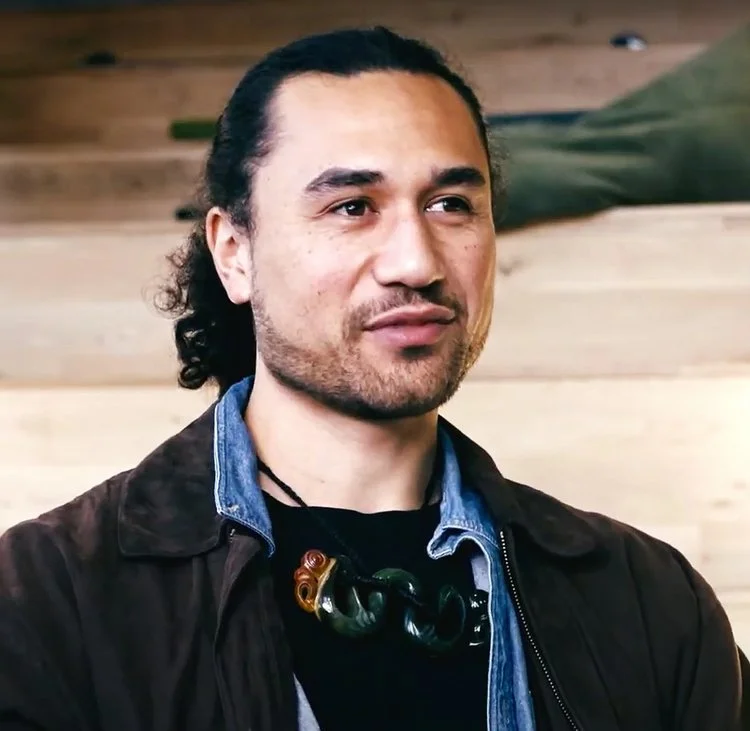
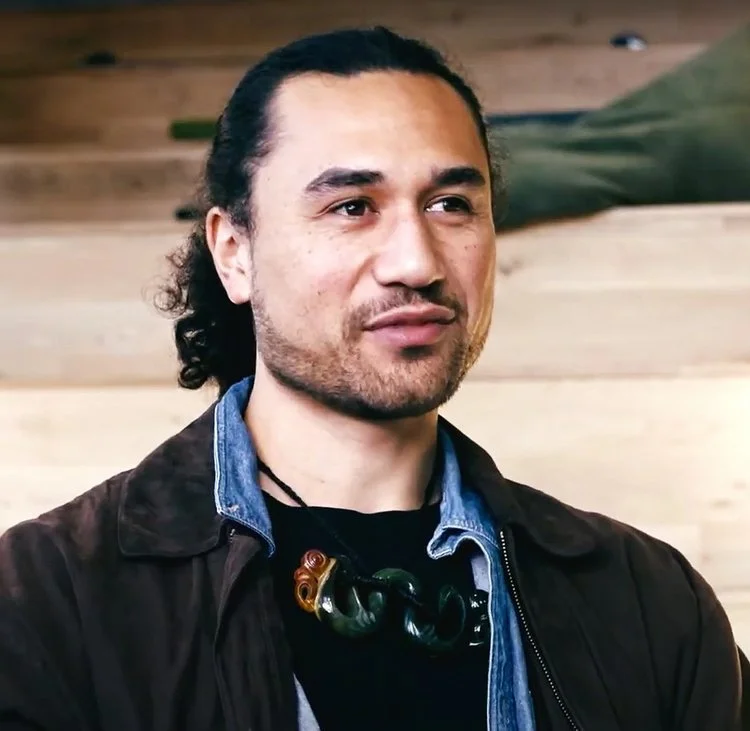
Our Speaker Nona Taute
Story by RRH Michael Markrich
University of Auckland Engineering Research fellow, and Ph.D. candidate Nona Taute, grew up in Rotorua, which is famous for its geothermal hot springs. He learned the indigenous thought processes of the Maori culture, in which he grew up, and related it to the Western structured theories of modern science imported from Europe that he learned in school. This led him into the parallel worlds he lives in today as a geothermal energy engineer and Maori practitioner.
One world takes him into the world of his ancestral gods, Papatuanaku the Maori earth mother, and the Ranganui, the Maori Skyfather. These beliefs go back in time to approximately 1000-1300 AD when the Maori first settled in New Zealand, the place they call Aotearoa. ( “Long White Cloud”). It is said to have been named by the Polynesian navigator Kupe.
The other world is that of power generation and utility deal-making between the Maori community and the White English (Pakeha) community, which conquered and colonized the country in 1840. The White community also created the first electricity grid in New Zealand in 1888. Approximately 70 years later in 1958, the government of New Zealand created its first power grid using geothermal technology to make electricity. This world was all about money-making and engineering and had little to do with the Maori community, even though it took place primarily on their ancestral lands.
Maori communities were said to have been traumatized by the agreements that were made. In 1991, the laws were changed in the country to put decision-making into the hands of regional districts, many of which were dominated by Maori communities. The specific legislation was called the Regional Management Act. (RMA). Over the next twenty years, new legal programs were implemented including the Strategic Environmental Assessment Program and there were pushes for Staged Development.
The Maori people were sensitive to the environmental impact of early geothermal developments that resulted in the subsidence of areas that included culturally sensitive historic sites and the loss of steam pressure which resulted in the disappearance of steam geysers. Careful assessment of geothermal fields was mandated that took into account all the environmental and social impacts of geothermal development.
Since then the two cultures within New Zealand, Maori and White, have struggled to develop a fair method of extracting geothermal resources, protecting cultural and environmental resources, and using the electricity for the benefit of everyone. At the present time Maori communities and private companies that develop geothermal energy participate in joint ventures so that the Maori communities benefit.
To balance the needs of the two communities and the needs of the resource, Nona developed an innovative algorithm that mixes Maori religious practice with modern engineering theory. Taute’s algorithm makes use “of a comprehensive set of indicators of sustainability -including cultural indicators acknowledging Maori interests and environmental, societal and economic and considering their level of mauri or life force – represented by a scale.” (https://www.thinkgeoenergy.com/balancing-indigenous-culture-in-geothermal-development)
In this way, he quantifies the ancestral beliefs of his ancestors in terms of measurements related to the power and potential of geothermal energy sites. The North Island of New Zealand is said to have the greatest resource of geothermal energy in the world. At the present time this energy represents 17% of the power on New Zealand’s grid but that amount is likely to grow as New Zealand moves away from fossil fuel towards a 90 % renewable mix by 2025. It is currently estimated the geothermal energy capacity is 1000 MW installed with perhaps another 1000 potential. In a single year, the 17 geothermal plants produce 7,500 GW about 7,500,000 MW. (By comparison in Hawaii only 37 MW of geothermal power is produced annually from a resource as great as New Zealand’s),
According to the website of the Association of New Zealand Science Educators Nona has used highly specialized workshops known as wānanga to develop his mathematical models.
“Nona’s wānanga (research) identified a “lack of early, meaningful and mutually understood engagement between engineers and Māori as the primary cause of disputes” about geothermal projects. He identifies Rūaumoko, the atua of earthquakes, volcanoes, and heat from the ground, as the foundation of Māori beliefs and decisions about earthquake hazards. “Māori believe that he is very powerful and non-forgiving”, and that when humans harm his mother Papatūānuku, he will respond by breaking the ground and flattening humanmade structures. Maori therefore fiercely protect geothermal resources. Nona says that earthquake engineering standards do not take account of Māori experience in building structural and community resilience to earthquakes and eruptions and that conflict between the value systems has been aggravated by a 2016 law that increased the minimum earthquake resilience standard for all buildings. Nona describes Mātauranga Māoribased decision-making as using the techniques and customary values from before European settlement. It includes tino rangatiratanga (sovereignty) and kaitiakitanga (guardianship). “It ensures that Māori are able to grow in knowledge, hand it down and gain economically.” In earthquake engineering, it means that engineers act under the advice of Māori representatives to account for the role of Rūaumoko as the enforcer against damage to geothermal systems.”
Nona’s wānanga discussed Māori values related to geothermal resources and engineering; Nona compiled and quantified those into a mathematical geothermal assessment of social, environmental, and economic impacts, to create indicators of how those values are upheld. “We relayed it back to participants, got their feedback, and refined the assessment, to ensure that we had preserved the foundation of the Māori knowledge we’d used.”
According to the website “https://nzase.org.nz/wp-content/uploads/2021/05/2021-05-Nona-Hohepa-Taute-NZASE-scientist-profile.pdf
Nona is a canoe paddler and frequent visitor to Hawaii. He brings to us his broad cultural knowledge and his interest in Hawaii. We thank you Nona for taking the time to speak with us. Mahalo!
Climate Change is Making Hawaii’s Roadwats More Dangerous
Sea levels have risen 9 inches over the last 100 years causing Hawaii’s roadways to become more hazardous.

Amin Leimin, Data Analyst - Weather changes on Hawaii Highways
An interview with Amin Leiman, project manager for a company analyzing climate change impacts on Hawaii’s roadways
By Madeline Henningsen
Climate change has caused Hawaii tides to reach the highest levels in 100 years and induced king tides in areas such as Mapunapuna, a lowly area adjacent to Honolulu’s Daniel K. Inouye Airport. The rising waters are making Nimitz highway and other areas more dangerous - causing wet roads and accidents. King tides are defined as “exceptionally” high tides that correspond to the full moon. These tides, which occur most often in December and January, and in the summer months of July and August, are becoming more powerful.
One reason is that climate change induced sea level rise is making offshore water levels rise along with the tides. It is estimated that sea levels around Hawaii have risen as much as 9 inches since the first tidal records were kept in Hawaii in 1905. Partly because of the impact of three years of La Nina, a warming of ocean temperatures in the Central Pacific - they have become so powerful they roll across low-lying areas like the airport runways like flood waters and then and flow directly into areas like Mapunapuna. The tides cause flooding which can rapidly engulf cars and drivers.

Sea level rise in Mapunapuna - Photo R Tabata Hawaii and Pacific Islands King Tides Project University of Hawaii Sea Grant
When the tides were lower people accepted the flooding and other risks associated with king tides as a fact of life along with the accidents they sometimes cause for local drivers. It was simply considered part of living in an island state, in which some areas of roadways are more likely to be more dangerous than others due to their proximity to coastal flooding.
What is happening now is different than in the past. Climate change has made sea water levels rise and with them the length, height, and duration of king tides. This is happening throughout the world and in Hawaii as well.
Computer software experts like Amin Leimin now challenge this view. Amin studies millions of data points over many years in order to determine when accidents related to climate change occur and how often.
Experts predict that king tides that manifest themselves as enormous sudden floods on roadways will occur more frequently due to sea level rise, which highlights the need for intervention. If the right data is collected, the frequency of these events in specific locations can be calculated and then preventative measures can be put in place beforehand instead of relying on after-the-fact solutions, potentially saving lives
According to the Federal Center for Disease Control and Prevention, car crashes are the eighth leading cause of death for all age groups and the leading cause of death for people ages 5-29. Transportation commissions around the world all have one basic goal: to reduce fatalities. To this end, the Hawaii Department of Transportation (HDOT) has started a cutting-edge project as a step towards reaching this goal. HDOT, in collaboration with Google, has an ongoing project with a leading local IT company to use data analytics to make Hawaii’s roads safer.
For example, The Nimitz Ala Moana Corridor (NAC), is notoriously backed up due to accidents in high numbers. Using state-of-the-art technology, Amin and his software engineers are monitoring Nimitz Highway, from Sand Island to Ala Moana, to collect data on hard-breaking, speeding, and accidents. This project uses live data to collect robust information to put in place countermeasures, such as coning, rumble strips, or narrowing lanes.
The countermeasures are then implemented, and before/after evaluations are performed, using data to determine if the number of accidents decreased.
Another section of the island that needs to be monitored with data is from the west side (Kapoiei) into town. The large number of people driving in this direction Monday through Friday leads to accidents, HDOT wants to know where, when, and why these accidents are occurring.
Progress is achieved by identifying an issue, collecting information on the causes of the issue, and implementing a change. Through the use of live data collection, city, and state government road engineers can help create solutions that save lives. Projects like this, and software engineers like Amin, are pushing Hawaii towards safer roads.
The Infallible Power Beneath Us: Geothermal A Hot Topic

Photo of Floyd McCoy PhD by Madeline Henningsen
The Infallible Power Beneath Us: Geothermal a Hot Topic
By Madeline Henningsen,
Interview with Dr. Floyd McCoy - Paraphrased for conciseness.
Wind, solar, and wave energy can be seen all around Hawaii, but are we truly doing the best we can to harness the earth’s power to shift from harmful, finite fossil fuels to infinite, renewable green energy? Dr. Floyd McCoy certainly doesn’t think so, one of the first comments during our conversation was: “It is just plain stupid that we are not using geothermal energy.”
He goes on to describe that the original technology for geothermal was really bad, when the system would break down it would leak harmful sulfur gases and many people got very sick because of this. However, that technology is long gone… but that idea persists causing many in the community to be reluctant to this shift. “The important thing with geothermal is to tell people it’s a closed system, it comes out of the ground and it never leaves, there are no leaks, it is not contaminated by anything else. The water comes out of the ground, supplies energy, and then goes right back into the ground.” It may sound unnerving to drill into the earth’s crust, for instance, what would happen if you drilled into an active magma chamber? “Magma would go into the pipe and clog it. It doesn’t cause an eruption, nothing horrible happens.” The fact that we are not using geothermal energy to its potential here may just be due to a lack of understanding – people can see solar panels, you can see wind turbines, and somewhat understand how the energy is being harnessed, geothermal isn’t as easy to grasp. This points to the desperate need for community outreach and education to address concerns and provide the insight into what geothermal really is and what it could do for our world.
According to Dr. McCoy, Puna on the Big Island is one of the locations that geothermal energy could be tapped into. “Embedded into the Native Hawaiian belief system is that Pele, goddess of fire and volcanoes who destroys and builds new land, resides in Halema`uma`u Crater, right by Puna. The belief is that by drilling into the land there, you are drilling into Pele’s body. Dr. Don Thomas gave a public talk at Manoa on geothermal energy and its potential, the whole audience was there to protest saying – “you are damaging Pele,” “you are disturbing the primordial forest in Puna that had never been penetrated before” ultimately leading to the end of his presentation.
McCoy said part of the key means of explaining how geothermal might be considered in a positive light, is to reframe the way Native Hawaiian and other ethnic groups in Hawaii think about geothermal energy. Rather than presenting geothermal drilling as being something that would be “hurting Pele” one could think of the energy provided from the heat of the volcanos as a gift from Pele. There has been more acceptance he says, with this way of thinking.
Every island has geothermal potential, every island is a volcano that will erupt again. The presence of hot springs indicates potential for geothermal energy. Here on Oahu, in Kaka’ako they began building the medical school and they drilled down to capture the cold water to circulate it through the buildings for air conditioning BUT they drilled down and it was hot water. There is still heat under the Ko’olau mountain range that could be used for geothermal energy. In Hawaii Kai, there is a hot spot that was covered with pavement to create a park – the basketball court is sometimes too hot to play. This was brought up in a class McCoy was teaching at UH Manoa and a student in the class talked about how her grandmother used to go there to cook food prior to the development that is Hawaii Kai as we know it today. There is evidence of hot springs on Lanai, Molokai, Maui, and the Big Island. This is all linked to geothermal and the potential for it to be used in Hawaii. “If you can’t find a hot spring, keep drilling” – the heat from volcanism is providing the energy. It’s an infallible source of energy for us.
McCoy prefers geothermal energy to wind. He explains, “You put up a big turbine, someone had to go mine the iron ore, take it to the factory, it requires energy to melt the metal, energy to transport it everywhere - it takes a lot of energy to produce one single wind turbine. Then you need to transport it to the site and it takes energy to get it up. It has around a 20-year lifetime and then it breaks and is “recycled” which also takes energy. You do not get back the energy that it takes to get it up and running” There is machinery cost for geothermal too and parts that would break and need to be replaced as well but at a much lesser extent and the energy yield far outweighs the cost and maintenance required.
There is no wind today, the sky is filled with clouds, and from my experience with solar power at my house it has been a week of very cold showers with the weather we have been having lately but with geothermal it is always there and it is always hot. And we’re finding out it’s all over the planet, if you drill deep enough it is there. With the International Ocean Discovery Program (IODP) they drill into the mantle, it is possible to drill deep enough from any location. The USGS produces maps of the geothermal potential of the US and the entire world, they’ve been researched and are publicly available making them theoretically easy to tap into since the ideal locations are public knowledge.: “It’s nuts that we aren’t doing it.” We can cover the landscape with solar panels and wind turbines, but the cost and loss of agricultural and natural lands may outweigh the pros. Native Hawaiians have been cooking food with the heat provided by the earth for many, many years on these islands without the advanced drilling technology that is present today, it is clear we are not doing everything possible to move away from fossil fuels when geothermal is so accessible to us. The heat is right below us; we are a part of a chain of volcanoes that are ready and able to supply the energy needed to rid us of our dependence on fossil fuels, all we have to do is harness it.

Green Hydrogen from Geothermal Volcanoes

By Michael Markrich RRH 2023 copyright
Hydrogen has been mentioned as a fuel since 1806 when it powered the first internal combustion engine invented by Francois Isaac Rivaz. The hydrogen fuel cell was developed in 1838 and its first use as a fuel came from science fiction thinking in 1923. Unlike fossil fuels, hydrogen gives off water as its by-product not spent carbon. It is among the world’s cleanest fuels.
But from that point forward hydrogen never really developed as a fuel because there were fears that hydrogen gas was too volatile and dangerously explosive. It was also expensive. In order to create hydrogen a process called hydrolysis is used which uses electricity to produce hydrogen gas from water under controlled conditions. The means to do this is through an electrochemical device called an electrolyzer.
But there was a problem. Electrolyzers require a lot of electricity to make the heat required for the process to work. It was never economical when compared to existing alternatives like coal and gas.
However, as fears of climate change intensified energy pioneers from Saudi Arabia to Norway to Vietnam began looking at the possibilities of green hydrogen - developed in electrolyzers from renewable sources - as opposed to blue hydrogen which comes from natural gas.
Some of the renewable methods have made use of solar farms to develop enough energy to power batteries that would make the electrolyzers work. But the solar farms are expensive and there are already complaints in Hawaii that they are using up too much valuable agricultural land.
The issue remained theoretical until 2008 when the price of energy spiked to $4.50 per gallon and electricity reached 50 cents per kWh on Kauai. Hydrogen proponents went to Republican Governor Linda Lingle. She introduced Senate Bill 240 in an effort to diversify Hawaii’s energy base which for transportation was then 90% dependent on fossil fuels for its energy needs; including producing 80% of the state electricity, Blll 240 became the Hawaii Renewable Hydrogen Program which was to take Hawaii in a carefully series of steps using a number of different renewable energy sources -including geothermal - to its goal of 100 % renewable energy in 2025. The report that was produced by consultants said that green hydrogen was economically feasible in Hawaii under certain conditions.https://energy.hawaii.gov/wp-content/uploads/2011/10/Analysis_of_Geothermally_Produced_Hydrogen_BigIsland.pd
The report said that “Hydrogen is viewed as the ultimate sustainable fuel for the United States if it can be made cost-effectively from renewable energy. “
The report went on to say:
“The Big Island has been specifically identified as a unique and favorable location to test and validate the potential for hydrogen-fueled transportation due to its variety of renewable resources (including geothermal), unique electrical generation system, and economy.”
The report further specified that electrolyzers that make green hydrogen from electricity and then mandated that County buses use this fuel as part of a pilot program.
The University of Hawaii Natural Energy Institute (HNEI) also began a program to test whether electrolyzers might be used to stabilize the Big Island grid like a large battery. The electrolyzers used as a variable load could help balance the Big Islands grid which is affected by intermittent renewable power such as solar and wind. They began to believe that electrolyzers powered by hydrogen might be a more effective and cleaner energy storage system than the Battery energy storage systems BESS that are presently used for this purpose.
The hydrogen produced as a by-product under this scenario could be used to operate fuel cell electric buses powering the Island of Hawaii’s bus system. By providing an inexpensive source of bus transportation it could take many cars off the roads on the Big Island in a situation where gas is sometimes very expensive. It is presently $6 a gallon in some areas of the Big Island.
The thinking of volcanoes - to green hydrogen to base electricity to green fueled buses in 2008 was so far ahead of its time it was largely an uphill battle led by Richard Rocheleau the director of HNEI and Mitch Ewan, the HNEI Hydrogen systems program manager. Hydrogen buses had already been used for some years in Oakland, California. But it was a reach for the Big Island where there was not a single electrolyzer. It became clear that if only a small amount of hydrogen were used many people could be transported on specially adapted hydrogen County of Hawaii buses.
The report created during the Lingle Administration envisioned that if “the Roadmap delineating the most prudent pathways for the development of a hydrogen energy infrastructure based on the geothermal resources on the Big Island of Hawaii through 2020. The results of this analysis indicate that hydrogen is a potential transportation fuel for the Big Island of Hawaii; however, a concerted effort by the state’s leaders and policymakers will be necessary for hydrogen to become a significant transportation fuel. The primary conclusions of this report are as follows: Conclusion 1: Hydrogen transportation fuel can compete with diesel only if the electricity to produce hydrogen is available at less than $0.10/kWh and diesel costs exceed $5.30 per gallon. In order to make hydrogen from renewable energy, electricity must be produced from renewable resources and hydrogen must be produced by splitting water using an electrolyzer. Our analysis indicates that the two main cost drivers in this process are the cost of electricity and the capital cost of the electrolyzer. Our conclusion is that, in order to compete with diesel prices greater than or equal to $5.30 per gallon, the cost of electricity to produce hydrogen must be less than $0.10/kWh.” [2]
Despite incredible setbacks such as volcanic eruptions shutting off geothermal power, lack of public support, and skepticism by politicians, Rocheleau and Ewan persevered. They won grants, obtained donations, and changed their plans several times
However by 2023 what once seemed like a quixotic quest became a reality. An electrolyzer was purchased and installed by the Kona airport, three hydrogen buses were purchased and the project suddenly became real.
Then as Big Island entrepreneur, farmer, and Native Hawaiian advocate, Richard Ha reported it has been announced that ORMAT generators can produce Hydrogen at 10 cents per kilowatt hour (-.06 cents per Kilowatt hour for the energy and a .04 cent charge to ratepayers). The present cost of diesel in Hawaii in 2023 is $5.96. Suddenly what seemed like just another government test project had become reality. The future had arrived.
What This Could Mean
Mililani Trask and others like Stan Osserman see the possibility of producing hydrogen on an industrial scale and shipping it as hydrogen gas to power the electrical grids of the other islands of Hawaii. Or as Osserman believes a model that would encourage the digging of geothermal wells on the private lands of existing energy plants that once burned coal or oil. Why not, he says, use that hydrogen fuel to power not just cars but the entire Hawaii economy?
“Modern drilling is NOT location dependent, so we should put geothermal where it's needed, NOT where there's volcanic activity. 3) Let's make sure we vet the technology and make sure the contract is clear and detailed regarding environmental and health implications, etc. (We need to have a clear picture of what we are getting into before we break ground, or get people’s hopes up). Expectation Management is critical.” says Osserman.[3]
Richard Ha began to see the possibility of a huge new industry of hydrogen coming from the volcano that could be sold to Hawaii, to the Pacific fleet, and throughout the world.
Saudi Arabia has started using its cheap energy to create liquid Hydrogen for export to Japan. Why couldn’t Hawaii do the same thing? 100 years ago Hawaii shipped its sugar to markets around the world maybe now it could ship hydrogen.
What’s more the creation of a hydrogen economy would enable the development of a new industry that would provide a guaranteed basic income through royalties to Native Hawaiians and other people in Hawaii. Currently, the Alaska Permanent Fund is worth more than $81 billion dollars annually. Why asks Ha can’t Hawaii do the same thing? This generation he says must help future generations of Native Hawaiians face the future. He calls it the “Rubbah Slippah Revolution” after the cheap rubber footwear worn by most indigenous people in Hawaii.
There is a caveat to all of this of course. The development must be ecologically sound and not be done on sacred sites. It should also as Trask asserts make use of ammonia and basalt - valuable commercial by-products of the volcanic process
As Mililani Trask noted, “All over the world we have a pressing crisis as a result of climate change. There is a vast renewable energy resource available.” And it sits directly beneath us.
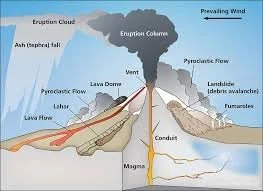
History of Geothermal In Hawaii Part II - From Ancient Times to the Present

National Park Service image of Hawaii Volcano
By Michael Markrich RRH Copyright 2023
Hawaii has a distinct advantage in geothermal access because it is located directly over 70 million-year-old volcanoes relatively close to the Earth’s surface. The Kilauea East Rift Zone (KERZ) is said to have some of the hottest temperatures on earth. Archaeologists have found evidence that Native Hawaiians hundreds of years ago cooked food wrapped in leaves underground so they would be cooked in steam cracks at well-known sites such as Sulphur Banks, Kilauea Iki, and the Napau Crater trails. They bathed in the warm waters of a spring at Waiwelawela for health. The energy and the heat that came from hot springs was a natural part of their world.
But since then development has evolved slowly. While other countries with active volcanoes like Iceland, New Zealand, El Salvador, and Kenya make substantial use of their volcanoes for electricity. (90% of Iceland’s electric power comes from volcanoes) -at a maximum, only 31 % of the Big Islands’ power came from geothermal heat. Today as a consequence of the Kilauea eruption of 2018 the percentage is 17%.
What then has prevented geothermal energy in Hawaii from going beyond being the Island of Hawaii when it could potentially generate 1000 MW - enough energy to power the entire state? A number of social political, economic, and geographic factors. It has not been for lack of trying.
A key reason was that for many years Hawaii was a key coal and refueling station for the US Navy. Oil and coal were relatively cheap. Except for relatively isolated places where there was high transshipment by barge for loading and reloading there was little incentive to change things. In addition to this was the fact that Hawaiian Electric Company, which was founded in 1891, was a monopoly that based almost all of its power generation on coal and oil. During that colonial period when Hawaii was first a Republic and then a US Territory, control of Hawaii’s largest power company was controlled by the Missionary Descendant elite.
As Trask has said, the Hawaiian Electric executives were not interested in taking risks, diversifying their holdings, or sharing the production of power with outsiders. As for the Native Hawaiian people, Trask said that the Hawaiians received a pittance - what she described as a “ percentage of a percentage of a royalty” from power generated on their lands. They were essentially denied the development rights over properties that they considered rightfully ancestrally theirs.
The first efforts to extract energy from volcanic heat took place in Italy in 1904. By 1913, Italy inventors had developed the world’s first working commercial geothermal plant in Larderello Italy which became a model throughout the world. On the Island of Hawaii, where a volcanic observatory had been first developed in 1909, efforts were made to do similar energy development projects from Hawaii volcanos. However, these early projects were not successful and did not get the continued support needed.
During the 1960’s businessman and Kapoho land owner, Richard Lyman learned of Japanese geothermal energy projects that generated electricity. Dreaming of developing a power company that could deliver – geothermal energy via cable to the Big Island and other Islands he found investors and then dug exploratory geothermal wells in Kapoho. He called his business, Hawaii Magma Power. Unfortunately, his company did not have the right technology and it ultimately failed.
Then in 1970, the Hawaii legislature directed the University of Hawaii to try and diversify away from oil. In 1972, the state of Hawaii created a program called ‘Project Pele’ to develop volcanic energy.
Project Pele was granted $200,000 by the County and State government in the hope of getting matching federal funds.
According to the official history, as the digging was about to begin a Native Hawaiian advocacy group came forward and expressed objections that “1) the drilling might violate the religious and spiritual beliefs of the Hawaiian people and that the Native Hawaiian people should have been consulted before the drilling took place and 2) that if the steam generated by the plant was released the Hawaiians should benefit from it because the Hawaii constitution states that indigenous natural resources should be used for the betterment of the Native Hawaiian peoples.”
The objections were addressed by Keller who said 1) the drilling was not taking place on any known sacred land and 2) that the steam would never be used for commercial purposes The project stalled again.
There matters remained with scientists, government, and business people - still wanting to drill and the community unsure of what was to happen next.
Then in 1973, war in the Middle East produced the ‘Oil Embargo’ and within four months the price of energy per barrel quadrupled. In Hawaii, the reverberations were felt immediately. Gas became available to people only every other day. Under recently elected President Jimmy Carter who was a supporter of alternate forms of energy, there was a new urgency to develop geothermal sources of power and in 1976 with money from the federal government, the first geo-thermal well was given the go-ahead.
It was called the Hawaii Geothermal Project Abbott (HGP-A) and was 6,140 feet deep By 1981 after more grant writing the federal government supplied enough funding for the Department of Energy to develop a 2.5 MW plant that would feed directly into the Hawaii Electric Light Company (HELCO) grid.
At about this time, HELCO put out an RFP for a 25 MW plant and a new company came forward, to provide it, on 500 acres of Lyman land. The new company was called Puna Geothermal Ventures (PGV) As the drilling proceeded it ran into public opposition
Public friction
In order to develop geothermal energy, wells are drilled deep into the earth’s surface in search of hot water reservoirs. When the drilling reaches the heat source, the steam shoots upward which is then used by the power plant to turn the turbines in an electric power plant. After the steam has been used by the power plant, it is disposed of with the brine by either dumping it onto the ground and creating surface "ponds," as was the case at the former HGP-A facility, or putting it back underground via injection wells.
What happened in Kapoho was that people living near the PGV area during the 1980s became concerned by the smells and emissions generated during the normal drilling exploration process. As part of the drilling process hydrogen sulfide and brine containing silica and heavy metals are released.
The technology works in two ways. If it is direct then hot steam powers comes up through the well and turns the turbine. If instead, it is a binary system, a secondary fluid inside a sealed metal tube is used. This secondary fluid usually uses a fluid with a lower boiling point than water to maximize steam to turn a turbine. The chemical that was used initially was Pantene and it is toxic. (However, this is for relatively shallow wells, when deep water wells are used - there is enough heat that ordinary salt water can be used to generate steam for turbines).
When the drilling started on the Lyman land there were few living in this largely rural area but by the mid 1980s, three subdivisions had been established.
In the meantime, PGV secured a contract with HELCO to supply 25 MW of electricity. An RFP was put out. It was won by OESI Power Corporation- an American subsidiary of the Israeli Company Ormat. Ormat promised improvements but the drilling issues - which were likely typical for their kind of work continued - and so did the community complaints.
Neighbors began to complain about the drilling on the 500-acre parcel about the constant noise and the smells. They became outraged when they discovered that no EIS had been filed.
Then to make matters worse, drilling accidents took place in 1991 at drilling well KS-7 in February at a depth of 1600 feet and then at KS-8 in June 1991 where the release of steam for 32 hours resulted in more anger by the surrounding community.
Soon, people living near the area where the wells were being drilled said they suffering from respiratory and other health problems connected with the chemicals and hydrogen sulfur in the air. The concern was also expressed about fracking which could cause earthquakes.
Eventually, these complaints generated from community groups coincided with the complaints of Native Hawaiian groups that they were being excluded from the process
The community groups that raised opposition included Hui O Puna and Kia’I Pono O Puna These groups which came to be known as Puna Pono Alliance all have expressed concern about geothermal energy, particularly on the possible threat it created as a source of pollution to land and water. They filed suit. There were demonstrations. Over the years complaints have continued.
Geologist Floyd McCoy recalls that opposition grew to geothermal drilling throughout the state and kept increasing until it reached the point where discussion of the issue could not even take place in public forums.
He recalled that in the early 90s’ University of Hawaii Professor Don Thomas, who was then the State’s foremost geothermal expert was giving a presentation when he was shouted down at a public meeting at the University of Hawaii by people protesting geothermal drilling.
In the meantime, efforts were made to fulfill the original developer Lyman’s dream of sending power to other islands via underwater cables from the Big Island to Honolulu. So great was opposition to geothermal politically because of the ongoing problems that Hawaii’s legislature failed to support it. Demonstrations took place outside the PGV which Milliani Trask recalled being part of demonstrations outside the fence of the PGV plant. She said that she was not against drilling but the way it was done had to be improved.
However, the construction of the plant continued and by 1993 the PGV was operational. Complaints, Lawsuits, and demonstrations continued into 2013 when two incidents resulted in the release of Hydrogen Sulfide the Environmental Protection Agency fined PGV $76,500.00.
Despite all these problems the PGV plant would grow to what it is today a 38 MW plant. It would supply 31% of the island’s electricity until its geothermal wells were covered with lava by the eruption of Kilauea volcano in May 2018 Then it shut down.
According to the Ormat website “On Sunday afternoon, May 27th (Hawaiian time), the approaching lava from the erupting Kilauea volcano, blocked the main access road to the power plant, covered the wellheads of two geothermal wells, burnt the substation of the complex and an adjacent warehouse that stored a drilling rig,”
After this occurred some wondered whether the plant would ever operate again. The occurrence made some aware of the enormous financial risks taken by Ormat to develop the plant. PGV would take two and a half years to bring back online. In 2023 PGV continues to operate but only supplies 17% of the power on the Big Island. The cap for geothermal energy on the Big Island is currently 60 MW.
The idea of Green Hydrogen is born
By the year 2000, the promise of sending power to all the Neighbor Islands from the volcanoes on the Big Island had stalled. There was no certainty that geothermal energy would further develop
Green Hydrogen expert Stan Osserman former director of the Hawaii Center for Advanced Transportation Technologies (HCATT) says that some of these problems that affected the development of the plant could have been avoided. He said that in terms of financial arrangements with Native Hawaiians, he says “: 1) The financial arrangements between the Power Producer and the Hawaiian Land Owner should be a straightforward one, The state has a bad habit of taxing, regulating and scalping funds that should go to Hawaiians! “
In the meantime, another dream began to emerge. Some dreamers began thinking that green hydrogen might be the answer to Hawaii’s problems.
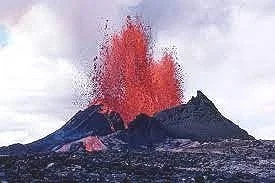
Geothermal Energy in Hawaii - A Brief History
By Michael Markrich RRH Copyright 2023

USGS photo of Kilauea Volcano
The limitless power of volcanoes was no mystery to the earliest Native Hawaiians. They attributed it to their volcano goddess “Madame Pele”. The immense power and beauty of Hawaii's volcanoes filled them with awe.
But how should the power of the volcanos be considered in these culturally sensitive times? Many have different views on how the immense energy of Hawaii's volcanoes should be used. It has been estimated that the power of Hawaii volcanoes in terms of energy production is 1000 MW. Enough to power the energy needs on all the Islands of Hawaii.
Native Hawaiians as a community have differed over the process of developing energy in Hawaii from volcanic heat. Some feel that Native Hawaiians as a group have benefitted very little from the Kilauea East Rift Zone (KERZ), a place some consider Hawaii’s own Saudi Arabia – because its reservoirs of steam heat are so accessible.
They believe that the lack of development of this resource is unfair since the heat from the volcanos could lead to energy independence for Hawaii and wealth that would uplift the Native Hawaiian community. Others differ and believe that the power of the volcanos should not be tampered with for cultural and spiritual reasons - some say its use is a “desecration” and that Hawaii should look to other means such as solar panels to generate electricity. There are also those who have questioned geothermal development for health and safety reasons - citing problems with earthquakes and respiratory problems that have been associated with geothermal development in the past.
Office of Hawaiian Affairs Trustee for the Big Island, Milliani Trask talks of “Tutu Pele” with reverence and thinks it is time to change how Native Hawaiians as the indigenous people of Hawaii consider geothermal energy possibilities. Trask, who is an attorney, has developed her own company- Indigenous Consultants – and a new model as to how future developments of geothermal energy on the Big Island or any place else in Hawaii should be.
She bases much of her expertise with geothermal energy on the time she spent in New Zealand helping local Maori communities negotiate geothermal energy contracts with energy companies. She believes that if negotiations are treated fairly in Hawaii -and if the technology used for generating electricity for the grid or hydrogen for transportation is the latest state-of-the-art and it can be respectful to local culture, present limited safety and health risks to surrounding communities and generate the renewable energy and revenues that the Native Hawaiian community and the Hawaii population as a whole need.
But the very first thing Trask explains, that the Native Hawaiian Community needs to consider when a geothermal proposal is made to them is how they as a people benefit from it. She has developed a system for analyzing how this is done. In past times she said Native Hawaiians were not even at the bargaining table. No more.
“We have built into our model ways for community benefit-sharing. For example, if you come into a community and you’re developing geothermal energy you’re making money! You have a business opportunity and you have a product that is energy so what do you owe that community? Number one you owe them a share of the revenue every year!”
She says “Geothermal energy is sacred to Hawaiians. It is a manifestation of the goddess Pele and from time immemorial has been viewed as a sacred energy which is incorporated into many cultural practices, memorialized in hula and chant, and preserved in ongoing modern religious ceremonies which occur not only on Hawaii Island but on all of the islands and in a distant archipelagic area known as the Northwest Hawaiian Islands.”
Trask adds
“The history of geothermal development reveals that it has been the cause of many actions of civil disobedience resulting in the arrest and prosecution of traditional Hawaiian practitioners and lengthy criminal trials. No solution has been forthcoming. Hawaiians have a cultural and property right to Geothermal resources as it is a ‘mineral’ asset of the Ceded Land Trust created by the US at the time of Statehood for the ‘public native Hawaiians unless development proceeds in a culturally sensitive way that accommodates indigenous Hawaiian concerns and rights it is unlikely that geothermal will be developed to secure an energy & food secure future for Hawaii. “
The thinking that Native Hawaiians are owed a share of Hawaii’s valuable geothermal energy has been supported by a 2014 opinion by the State of Hawaii Attorney General’s office that Native Hawaiians are entitled to 100% of the proceeds of geothermal development on Department of Hawaiian Home Lands (DHHL). However, as Trask explains - one must be cautious in expectations. She said an opinion is just that; it is not law.
Native Hawaiian entrepreneur and farmer Richard Ha has taken this a step further saying that perhaps it is time to think of Hawaiian volcanic heat as a community resource that can generate steam for power or hydrogen gas for transportation, as a means of providing Hawaiis’ own version of the Alaska Permanent Fund (APF). This fund which is based on oil revenues from Alaska oil fields is currently estimated at more than 81 Billion dollars and currently provides an annual dividend payment of $3,200 to all the residents of that state. A similar step applied to a successful geothermal project – tied to green hydrogen - that could be used in Hawaii as a fuel or exported, would in Ha’s mind, be a long overdue game changer for the Native Hawaiian community. It would aid Native Hawaiians – who suffer disproportionately from poverty and the threat of homelessness. It would alter the Hawaii state economy making Hawaii a world center for green hydrogen production. It would also enable Hawaii to reach its goal of using 100% renewable sources of energy by the year 2045
[1] (Geothermal Energy Projects, Hawaii Geothermal Project Background, Louis Goodman, Tetsuo Myabara and Barbara Yount, 1980)

Geothermal Energy on Hawai'i Island helps fulfill State of Hawaii pledge for green hydrogen future

USGS photo - Hawaii volcano
The pending decision by the Hawaii Public Utilities Commission (PUC) to approve a Power Purchase Agreement (PPA)between the Hawaii Electric Light Company (HELCO) and Puna Geothermal Ventures (PGV) could fulfill a 13-year-old State of Hawaii government plan to use the heat from volcanoes to bring green hydrogen energy to Hawaii.
Although now little known, in 2009 Governor Linda Lingle signed Act 240, a piece of legislation that pledged to bring green hydrogen as a fuel in common use by the year 2025. That year will soon be upon us and with it, soon, if all goes according to plan, the production of green hydrogen fuel, five refueling stations, and the ability to power buses, trucks, and automobiles with renewable energy around the Big Island with low-cost hydrogen for the first time.
According to the PPA which if it is approved, is to be implemented in 18 months - HELCO is to buy 20 MW of PGV’s expanded energy production at 6 cents per kWh. An Ohio-based company manufacturing hydrogen fueling stations called Millenium Reign Energy (MRE) will then pay HELCO 10 cents per Kilowatt hour to produce green hydrogen. In 2009, the State of Hawaii consultant hired to do the study on the ACT 240 program, projected that hydrogen could compete with diesel fuel on the Big Island when the hydrogen could be produced at .10 cents kWh and diesel fuel exceeded $5.30 per gallon. Those conditions have now been met.
The Geothermal Dream Becomes Reality
For many years there has been a dream in Hawaii to harness geo-thermal energy to provide base power for all of Hawaii as has been done in Iceland and New Zealand. Research done by the Hawai‘i State Energy Office in 2016 suggested that there may be more than 1,000 MW of geothermal reserves on the Big Island, enough to collectively power Maui, the Big Island, and about one-quarter of O’ahu.
At the present time, geothermal energy powers just 20 percent of the Big Island grid. This is down from 30 percent before the eruption of Kilauea in 2018. With the increase in production projected by PGV, under the proposed PPA, from 38 MW to 46 MW for the PPA it is likely that geothermal energy will grow as a proportion of the Hawaii renewable energy mix.
The promise of green hydrogen -with its possibility for exporting energy to other islands in containers via barge - to power heavy trucks and other equipment is an important element in that effort. If all goes as planned, it will encourage further expansion of PGV capabilities on the Big Island to produce geothermal energy from volcanic heat and help the State meet its target of 100% renewable energy by 2045.

Interview with Tom Quinn

Tom Qunn, Inventor
Interview with Tom Quinn
CEO and President of E-Fuel Corporation
Tom Quinn is a successful Silicon Valley entrepreneur. He grew up in California and lived in the same Neighborhood as Steve Wozniak and Steve Jobs of Apple. A prolific Inventor he is the former president of Novell Corporation and is the inventor of the Inertia graphic control system – motion controller technology that formed the basis of the successful Nintendo Wii toys and is and is now found in every phone. After selling his company in 2008 he decided that the energy field was the one he was most interested in because it is at the center of climate change. Quinn, who is an advisor on climate change to President Joe Biden - has invented an entirely new system of power generation that he says uses agriculturally grown products to produce energy from the distillation of sugar in naturally grown plants. He calls this E-Fuel.

Tom Qunn’s “Rejected Energy Reactor”
Quinn’s system is called “the Rejected Energy Reactor” which makes use of “rejected energy” otherwise known as waste heat. These are special cogeneration units which he believes will reduce 77% of the world’s Carbon Dioxide emissions. The by-products of his specially designed co-generation system – which will run 24/7 and be base power - are not carbon soot but pure distilled water and electricity. He believes that this will change the world within five years. People who doubt him should remember that he was the principal inventor of the data storage system we now call “the cloud”.
Quinn is working with Keoni Ford, Scotty Wong, Scotty Reis-Moniz, and Alika Watts in Waianae on what he describes as “a new and revolutionary System”. Although he gets inquiries about his system from all over the world, he believes that Hawaii, with its high electricity costs, is the ideal place to demonstrate on a local level that the world can free itself from dependence on fossil fuel.
He came to speak at the 8th Annual Bio-Economy Forum which was held August 17th and August 18th, 2022 at the Hawaii State Capitol.
Interview August 19, 2022
Q: Tom thank you for taking the time to speak with us. What brought you to Hawaii
Tom: I came to Hawaii at the invitation of Keoni Ford and Scotty Wong. I met the Native Hawaiian people and they are very interested in my E-Fuel technology. I am appreciative of the people in the Hawaii State Legislature and State government who are supporting the use of E-Fuel technology in a meaningful way.
Q: What year were you born and how did you get into the computer business?
Tom: I was born in San Jose California in 1954. My father and mother were from New York. My Dad was in the Navy and decided to get out of the service and start a small television repair shop. I was working with my Dad from the age of 10 fixing TVs and with my Dad’s brothers fixing cars. This was the way I was introduced to electronics and mechanical systems.
Q: You went to public school or private school?
Tom: I went to public school in Sunnyvale through high school.
Q: Then you went to college
Tom: I went to De-Anza College (in Cupertino) for two years and majored in political science but I didn’t like it. I was working for Al Schugart at Seagate Systems. Schugart helped develop Memorex and the disc storage system. His company Seagate Technology was the world’s largest developer of disk drives in the world. The company was later bought by Xerox. I was making too much money to want to go to college. I come from a family of people who make things and create things and we have a strong ethic.
When I was young, my father was recruited by Lockheed. But he still kept his television repair business. He would leave home early in the morning, go to work at the Lockheed plant, and then come home and go back to work on the TVs in the shop. He worked every day repairing TVs. I grew up in Silicon Valley with Steve Jobs and Steve Wozniak. We all had parents that worked in start-ups and we were bred for technology and changing things. We weren’t so much into going to college. We wanted to create something new.
When Steve Jobs was alive he said that he would never require people who applied for work at Apple to have college degrees. He said that it was important for people to have ideas and be able to do things. He said, “Think Different”. When I had my own companies I would also look for people not with PhDs but who were capable of doing things. Even today at Apple the CEO Tim Cook has said people do not have to have college degrees to work there.
When I developed the inertia traffic control that was later used in Nintendo Wii games and is now in every phone the first prototypes were the size of a coffee can. Because at that time gyroscopes were that way. We had guys from Teledyne who were the biggest gyroscope makers look at what we were doing and they said ‘You will never make it!’ When I heard that I thought that’s it we are going to make this happen. It’s going to succeed and it did.
When I went to school in the 80s everybody had punch cards that they used to enter data into big centralized computers and when the computers went down. People didn’t have access to information. I thought we should mirror the information people get on small computers so that multiple computers could process the same information but in different locations. That was Novell and that idea became what we call now the cloud. Then I sold that company and I developed the motion sensor. The inertia graphic control system takes linear movement onto graphic movement on a screen and rotation. First, it was used in toys like Wiii. Nowadays it’s on every phone and when you drive a car it records your linear movement.
I think it used to be that everybody felt that you had to go to college to succeed but now 40% of people go out and learn on their own.
Q: How did you start the e-fuel business
Tom: I thought energy was not going in the right direction.

“I started researching I came a cross a Livermore labs diagram for energy consumption in 2008 and it shows that 60% of the worlds energy is rejected energy that is released as heat and that number is increasing each year so that it is now 70%.”
Q: What Is Rejected Energy?
Tom: Rejected energy is basically heat. They used to call this waste heat that can’t be used as energy. Coal for example is 2/3 wasted. But the idea that it is waste heat is incorrect. The law of thermodynamics states that energy can neither be destroyed or created. Rejected energy is simply energy that is not being used.
This means that for every 3 barrels of oil used to produce mechanical energy two barrels are rejected energy. Mechanical energy is everything that is being manufactured and the biggest sources of this rejected energy are fuel and power generation.
So I said why power the world with something so grossly inefficient? In contrast to petroleum which is 1/3 efficient why not go instead to the distillation of sugar which is 100% heat?

“Sugar is the main source of energy on the plant. So lets use that for fuel with ethanol. Then I had to develop a means to do that”
This became my micro-fueler a waste-to-energy converter.
Q: How does it work?
Tom: When we use rejected energy we can use the old saying “One man’s waste is another man’s treasure.” We can take any kind of agricultural waste and turn it into ethanol fuel that can be run in any vehicle. It can also power our generator which we call our grid buster.me. It creates enough electricity to power your home, creates heat for the distillation process, and creates fuel for your car.
We start with agricultural products like hemp, we use a machine that cuts it into small pieces turns it into a powder puts it in four tanks, and then uses the heat of the sun and allows it to ferment.
Over the last 12 years, the amount of rejected energy has increased .3% so things are getting less efficient, not more efficient. We can’t just stop using carbon-based fuels because almost everything depends on it. E-fuel has found a way to consume existing carbon and consume it so it will be able to reduce the carbon in the atmosphere.
What we plan to do is take feedstock and deliver the biomass to reactor converters all over the world and create ethanol with it 24/7.
But while we cannot simply stop using carbon-based fuels (because almost every commercial and industrial product depends on it), E-Fuel has found an aggressive innovative way to consume it that will begin cooling the planet quickly. In Hawaii, we are going to use the power we generate to create dry ice – which is otherwise too expensive to make.
With ethanol, if you make use of 3 barrels you consume 3 barrels. When you use rejected energy it becomes carbon negative and you are producing distilled water and mechanical energy.
Q: How will it plug into the grid?
Tom: First of all the grid is the most dangerous thing. Geo Magnetic bursts from the sun can cause it to explode. We have to have distributed energy. Our RER reactors can be connected one to another and power individual homes. One has to think of old-fashioned mainframe computers where programmers had to keypunch data. When the mainframe went down everything went down. When we were at Novell we said let’s mirror individual computers so that everything has a backup. That became the cloud. We need to do something similar with power. Everybody at home should have their own power system. Microfuellers are going to replace the grid and oil refineries in the way that microcomputers replaced mainframe computers
Q: How will it cool the planet?
Tom: If we can replace the refineries and chemical industry processors with this technology we will cool down the planet very fast because there will be significantly less heat released into the atmosphere.
Q: And what happens to the water by-product?
Tom: The water by-product contains carbon and is sold to growers as a replacement for the chemical Nitrogen which is an oil-based product brought in to be used as fertilizer.
Q: How much does the system cost?
Tom: Customers will be charged for the initial installation and then a competitive monthly energy rate price.
Q: How do you deal with criticism that this cannot be successful?
Tom: When you do something different and it starts impacting the market. That’s when the knives come out. It’s to be expected.
Thank you
Professor Floyd McCoy on the Mauna Loa Eruption

USGS Diagram describing the current state of Mauna Loa Volcano as December 1 2022

Dr. Floyd McCoy recently retired as a senior professor of geology and volcanoes at the University of Hawaii. This is his take on the recent eruption at Mauna Loa
What does the Mauna Loa Eruption tell us about the power of volcanoes in Hawaii?
It tells us the power is immense, uncontrollable and needs to be tapped
( During the 1970s and 1980’s a study indicated that the volcanoes on Hawaii
Produce 1000 MW per day – enough to power all of Hawaii)
How could we harness the power of Mauna Loa?
We can harness it through geo-thermal energy but lets wait until this eruption finishes.
Would we always have to worry about the volcano overflowing and damaging the plant?
Yes just as we worry about Hilo
What is the your earliest memory of a volcanic eruption?
1942. Mauna Loa. I saw it from Honoka’a where we lived then.
In Hawaii we have been responding to volcanic eruptions for the last 100 years.
How does the cost of harnessing geo thermal compare to other forms of available
Energy?
The cost is irrelevant. We just have to do it.
CONVERSATION WITH BENJAMIN MARTIN OTEC PLANT OPERATOR

Benjamin Martin the Operator of the Kumejime Power Plant on Kumejime Island in Okinawa.

Kumejime Power Plant
How does your day begin. How does it end?
It depends on what’s going on. The OTEC Facility itself runs automatically and autonomously.
This means we don’t need to be at the plant 24/7. I do a daily visual inspection on workdays which takes about 15 minutes.
I also periodically do more in-depth inspections. If I find something wrong, we fix it. Since we’re near the ocean and open, this generally mean combatting corrosion such as painting. On a painting day, I’m there from morning to night either removing rust or painting. On the occasion where equipment such as piping is to be exchanged, we generally hire a contractor and I supervise. We also do regular electrical inspections carried out by experts.
If we want specific data or want to simulate certain circumstances, I can control the facility manually through either a switch room or our computer control. In that case, I’m just sitting at my desk pressing buttons.
As a demonstration plant, one of our purposes it to show the facility and we do get a lot of tour requests. When visitors come, we generally spend about an hour introducing ‘ The Okinawa Deep Ocean Water Research Center ‘(ODRC) and our OTEC demonstration with a mini-model, as well as showing around outside. In some cases, we’ll Introduce the other deep ocean water industries.
Can you tell us how you became involved in this type of work?
It was luck. I was working here on Kumejima when the OTEC plant was established. Kumejima Town asked if I was interested in working at the plant as a local staff. I agreed.
How many members does your Ocean Thermal Energy Association have?
We now have more than 510 members and observers from 48 countries and regions.
Are you seeing growth?
We have seen steady growth in membership over our two years. We are an all-volunteer organization so our activities and output are limited, however, I believe we have been able to form a community of OTEC Stakeholders.
What kind of outreach are you doing?
We operate the otecnews.org website, hold regular meetings, support webinars and events, and keep our members up to date via email and SNS. We’ve created some materials for our members to use, and would like to more in the future.
What countries have shown the most interest and what age groups?
Many of the tropic and subtropic communities are interested, and we do have a student contingent. In terms of actual project development Japan, Mauritius, Malaysia, Nauru, and an England-based venture have been most active recently. We are starting to see more international-level organizational interest from government and private sector.
How can people in Hawaii help advance the OTEC idea?
OTEC for Hawaii is challenging as there is a contingent of the population reluctant to endorse any new development, especially in the ocean. There are ways to limit the visual impact of an installation (spar-type so its mostly submerged), which will likely be the best use case for Hawaii. In this respect, more scaling is still required. In the short term, discussing OTEC with leaders and politicians towards creating the opportunity, such as through federal support, or through support for an international cooperation project would be the swiftest approach towards getting the technology ready for Hawaii.
I hope this is helpful to you.
Sincerely,
Benjamin Martin
Water is Too Valuable a Resource to be used only once - Potable Water Seminar
--
Creating Value Through Onsite Non-Potable Water Systems
5th, October, 2022
1:00–2:00 p.m. PT
Greetings, NAWI Alliance community! You are invited to the next NAWI webinar featuring Manfred Zapka, Ph.D., PE and Phyllis Horner, Ph.D., WELL AP, Patrick McCleary of JMCS Services, and John and Paul King of Kapa'a Light Industrial Park, on Creating Value Through Onsite Non-Potable Water Systems (ONWS). They will provide details on the significant capabilities ONWS have in reducing potable water demand and helping to conserve valuable water resources, and how they are of financial value for organizations.
Registration is required and spots are limited.
We hope you will join us for this informative event!
About the Speaker
Manfred Zapka, Ph.D., PE, principal of Sustainable Design and Consulting LLC, has dedicated his professional career to help create healthy and sustainable built environments, for buildings and infrastructure. He is a certified green and healthy building professional with LEED AP and WELL AP credentials and is a Council-certified Indoor Environmental Consultant (CIEC). He is an adjunct professor for architecture, a researcher for building systems, and an engineering consultant. He believes that water is too valuable to be used only once. He has been promoting the use of ONWS through pilot projects, process optimization, and advocacy.
Phyllis Horner, Ph.D., WELL AP, is an organizational psychologist and expert in creating measurable bottom-line value by creating spaces that are healthy, safe and sustainable, both physically and psychologically. She is the CEO and founder of Great Places and Spaces (GPS) a company dedicated to changing the way how valuable places are created, based on health, wellness and sustainability. GPS has developed ROI models for healthy and productive workplaces which assists organizations to select and assess the performance of investments for optimized workplaces. Similarly GPS has developed a roadmap of how ONWS can be developed, based on ROI, technology advances, and engagement of the stakeholder.
Patrick McCleary, President, JMCS Services, has been in Real Estate development for 30+ years, and he has experienced numerous challenges with municipal sewage treatment. He is a technology developer and has been implementing onsite wastewater treatment systems to realize development projects in rural areas where there are no sewers available, as well in high end developments with waterfront land where traditional septic system are not working well. Patrick will share some examples of how onsite wastewater treatment has created attractive financial performance for private developers and municipalities. Using onsite treatment opens up new sources of water for non-potable uses, avoids investment in larger centrally positioned wastewater collection and treatment facilities, and enables expedited development of much needed housing and commercial developments which cannot connect to sewers right away.
John and Paul King, Kapa’a Light Industrial Park, are developers and operators of one of the largest light industrial warehouse parks in Hawaii. Their development is on a former landfill and close to an environmentally sensitive wetland. Their success in getting public and agency acceptance is supported by their commitment to use environmentally friendly site development technologies, including advanced onsite wastewater treatment. They are using MBR technologies that create high quality effluent that can be reused onsite, and/or safely infiltrated to protect adjacent aquatic resources. Today, John and Paul will share their motivation to use advanced wastewater treatment and go beyond local wastewater code requirements, and their experiences with process implementation and regulatory agencies.
About the Topic
It is universally accepted that Onsite Non-potable Water Systems (ONWS) are capable of significantly reducing potable water demand and therefore help to conserve valuable water resources. The public sector, including utilities and regulatory agencies, have historically been the main players promoting ONWS.
Reducing the need to use potable water for many applications is of the utmost importance as many nations look for solutions to drought conditions. Recent options to stimulate broader adoption of ONWS include initiatives by private developers and building owners and managers to use ONWS in their projects. Using ONWS is not only beneficial to the environment, it also adds value to organizations which face water-related barriers to develop and operate built environmental assets.
ONWS can create attractive financial results when used in a smart way, and ONWS can create attractive ROI scenarios for communities, private developers, and building owners/managers, creating investment opportunities.
This presentation will highlight and quantify the financial value proposition of ONWS. Aspects of mitigating risks to public interests will be addressed for regulatory agencies to facilitate private ONWS applications. Since implementation of ONWS technology includes change management and a shifting perspective of the public as well as other stakeholders, the human behavioral aspect of introducing these systems will also be discussed. Case studies and testimonials will illustrate the pertinent benefits.
P.S. - We will take your questions live, so add them in the comments section during the event. Log in to the NAWI Alliance community website to access the recorded sessions and presentations within the media center at a later date.
Questions or feedback?
Contact:nawi-info@lbl.gov
You are receiving this email notification because you are a registered member of the NAWI Alliance.
To adjust your notification settings, click here.
To unsubscribe, please click here.
Ocean Thermal Energy Conversion - a hundred year old technology powering today's fight against climate change
In the early 1980s, because of an oil embargo, the US Federal Government enacted the OTEC Act and provided government funding to initiate the implementation of Ocean Thermal Energy Conversion (OTEC) plants for the generation of electricity.
The long-term goal was to install hundreds of OTEC power plants by the year 2000. Unfortunately, by the middle of the 1980’s, government funding was curtailed before an OTEC plant of significant size could be operated.
However, 98 nations with the adequate ocean thermal resource within their Exclusive Economic Zone (EEZ) were identified. Currently, world-wide numerical ocean-atmospheric models indicate that as much a 50% of the electricity currently consumed throughout the world could be generated with fossil free OTEC technology.
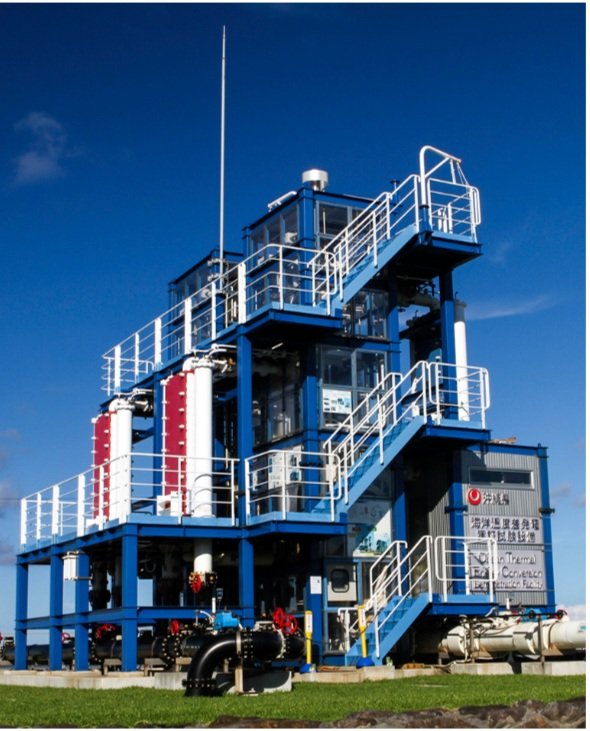
Okinawa OTEC facility
Since the late 1970’s, several relatively small OTEC experimental projects in the USA (Hawai’i), Japan and South Korea have already demonstrated that the technology works 24/7 generating electricity and desalinated water without CO2 emissions into the atmosphere. However, it was also determined that adequately sized pre-commercial projects must be operated in situ and for at least one continuous year to obtain the records required to evaluate what is considered to be commercial sized plant ships that could be deployed world-wide.
This argument excluded niche markets in small-island-developing states (SIDS) wherein land-based plants sized at a few MW could be cost-effective. Given the current goal for the implementation of renewable energy technologies for the generation of electricity minimizing the use of fossil fuels, OTEC should be considered as a path towards reaching the world-wide 2050 carbon-neutral goals.
Unfortunately, the US government is not currently involved in the implementation of OTEC while South Korea and Japan have taken the lead. There is also some funding for further studies from the European Union and International Agencies. In addition, China is also involved as indicated by numerous journal articles.
It has been speculated that there could be more than 20 trillion dollars spent on OTEC plants over the next 30 years. The new possibilities have encouraged investors in at least Japan and Korea. Currently the only operational plant is a relatively small 100 kW plant on Kumejima Island near Okinawa. It is owned by the Okinawa Prefectural Government with MITSUI OSK Lines, Saga University, and Kumejima Town borrowing it for research and development. Benjamin Martin the Secretary General of the Ocean Thermal Energy Association and as part of Xenesys Inc, operates the plant on behalf of the prefecture.The Korean Research Institute of Ships and Ocean Engineering (KRISOE) has designed a 1 MW plant for Tarawa Atoll in Kiribati. This plant was successfully tested on a barge off South Korea (a site without the thermal resource available off Tarawa) before the Pandemic hit in 2020 and generated 338 kW during trials scheduled to test the equipment. Dr Hyeon-Ju Kim, the principal researcher, is currently planning to install the prototype plant at Tarawa Atoll in Kiribati.
Two other projects are still in the conceptual stage, Yasuyuki Ikegami, Prof., Director of Institute of Ocean Energy,Saga University, in Japan is leading a Mitsui OSK lines proposed Mauritius project and another for Nauru. Whether or not these projects get funded is still in question, but the time may be right. OTEC supporters in the science and business communities believe that with the cost of fuel and concerns about climate change at its present level the OTEC market may be on the cusp of an "avalanche of funding”.

The major conclusion continues to be: There is a market for OTEC plants that produce electricity and desalinated water, however, operational data must be obtained by building and operating demonstration plant ships scaled down from sizes identified as potentially world-wide cost effective.
The major challenge continues to be: How to finance relatively high capital investments that must be balanced by the expected but yet- to- -be demonstrated low operational costs?
Given that it takes decades for new energy technologies to reach maturity, it seems sensible to once more consider the ocean thermal resource as a renewable energy for the future.
Perhaps a lesson can be learned from the successful commercialization of Wind Energy due to consistent government funding of pre-commercial projects that led to appropriate and realistic determination of technical requirements and operational costs in Germany, Denmark and Spain. In this context, by commercialization we mean that equipment can be financed under terms that yield cost competitive electricity. This of course depends on specific conditions at each site.
Please join us for an interesting ZOOM session discussing the 100-year-old technology capable of providing power 24/7 with no carbon dioxide emissions.
The OTEC Program will take place September 2 at 2 pm. Please join us at this HERE
Has the time to turn 100 year old dreams of Ocean Thermal Energy Conversion (OTEC) into 24/7 electric power?

100 kW Demonstration Plant
Kamejima Island, Japan
Photo Okinawa Prefecture
Is the time now for an “avalanche of spending” on Ocean Thermal Energy Conversion” OTEC.
98 nations with the appropriate ocean thermal resource within their EEZ’s have been identified sine the 1980s.
By Michael Markrich and Luis Vega Ph.D.
Each year the United Nations group known as the association of Small Island Developing States (SIDS) spends an estimated $20 billion on the oil to power their small isolated electrical grids. The cost of supplying these small isolated communities in the Caribbean, the Indian Ocean, the South China Sea, The Pacific Ocean and Africa is largely by fuel barges and has always been more expensive because of the small individual markets they represent and the additional transportation costs. But since the war in the Ukraine began disrupting supply chains, the price of providing base power to these small isolated communities is said to be “astronomical”. There is therefore a need for an alternative that can economically provide a steady source of base power.
For this reason 2022 may be the moment Luis Vega Ph.D believes that Ocean Thermal Energy Technology (OTEC) finds its market. Particularly for OTEC plant-ships housing power plants rated at 10 MW to 100 MW. For example, ten 100 MW plants would be required for Oahu. One 10 MW plant for American Samoa. There is also a market for land-based OTEC plants sized at 1 MW to 2 MW that could be used in smaller SIDS like, for example, Kiribati, Palau etc.
OTEC technology uses the temperature difference between surface warmer water and deeper colder water encountered in the tropical oceans as the source of thermal energy. At this time, OTEC systems are in the pre-commercial phase. In this context, “commercialization” means that a project can be financed under terms that yield cost competitive electricity and desalinated water. This of course depends on site-specific conditions. Several relatively small experimental projects have already demonstrated that the base load technology works 24/7.
98 Potential markets
Ninety-eight (98) nations with access to the required ocean thermal resources within their 200 nautical mile exclusive economic zone (EEZ) have been previously identified. There is also a market for industrialized nations that could manufacture and supply the equipment required for OTEC plants, even if they do not have the required ocean thermal resource within their EEZ. The world-wide resource is equivalent to more than 7 TW {equivalent to 70,000 one hundred megawatt (100 MW) plants}. Each 100 MW plant would require a capital investment of about ¾ billion dollars such that the ultimate market, in a few decades, would be valued in trillions of dollars.
In this fashion, two distinct markets were previously identified: (i) industrialized nations; and, (ii) small island developing states (SIDS) with modest needs for power and fresh water. OC-OTEC plants could be sized at 1MW to 10 MW, and 450 thousand to 9.2 million gallons of fresh water per day (1,700 to 35,000 m3/day) to meet the needs of developing communities with populations ranging from 4,500 to 100,000 residents. This range encompasses the majority of SIDS throughout the world.
Floating plants of at least 50 MW capacity would be required for the larger island nations such as for the Philippines. These would be moored or dynamically positioned a few kilometers from land, transmitting the electricity to shore via submarine power cables. The moored vessel could also house an OC-OTEC plant and transport the desalinated water produced via flexible pipes.
The major analytical conclusion continues to be: there is a potential world-wide market of more than 7 Trillion Watts for OTEC plants that produce electricity and desalinated water. However, operational records must be obtained by building and operating floating pilot plants which are scaled down from sizes identified as potentially cost effective.
How it Works
OTEC is a century old technology, first envisioned by French engineer Jacque-Arsene d’Arsonoval which uses the nominal 20 degree difference between cold deep ocean water and warm surface water found in tropical and some sub tropical climates to provide base power 24/7. It emerged as a series of futuristic inventions in the 1880’s era of Jules Verne. It was first successfully tested in 1926.
The closed-cycle concept uses the relatively warm (24 °C to 30 °C) surface water of the tropical oceans to vaporize pressurized ammonia through a heat exchanger (i.e., evaporator) and use the resulting vapor to drive a turbine-generator. The cold ocean water transported (upwelled) to the surface from 800 m to 1000 m depths, with temperatures ranging from 8 °C to 4 °C, would condense the ammonia vapor through another heat exchanger (i.e., condenser). Because the ammonia circulates in a closed loop, this concept has been named closed-cycle OTEC (CC-OTEC)
Alternatively, the open-cycle uses the ocean water as the working fluid. In this cycle the surface water is flash-evaporated in a vacuum chamber. The resulting low-pressure steam is used to drive a turbine-generator and the relatively colder deep seawater is used to condense the steam after it has passed through the turbine. This cycle can, therefore, be configured to produce desalinated water as well as electricity. This cycle is referred to as open-cycle OTEC (OC-OTEC) because the working fluid flows once through the system.
But Can it work financially
The possibility of providing a new OTEC for 98 such potential markets (in plant-ships or land based) has so excited a new generation of OTEC entrepreneurs that a new global OTEC fund has been started and two new pilot projects set in motion. Promoters believe there may be $25 trillion market over 25 years supplying these sites with permanent base power. The new possibilities have encouraged investors in Korea, Japan and Europe.
The demonstration plants will have to be funded by governments as tests of concept as in many other early renewable technologies. In the case of relatively small land-based OTEC plants there is enough engineering and operational information available but the smaller SIDS do not possess the required investment capital of creating this power source have always been too high. But the present cost of fuel and concerns over climate change may have created a new impetus for governments and international aid organizations to underwrite one or two trial plants.
Currently the only operational plant is a relatively small 100 kW plant on Kumejima Island near Okinawa. It is owned by the Okinawa Prefectural Government with MITSUI OSK Lines, Saga University, and Kumejima Town borrowing it for research and development. Benjamin Martin the Secretary General of the Ocean Thermal Energy Association and as part of Xenesys Inc, operates the plant on behalf of the prefecture.
Another plant, built and tested off Korea is being scheduled for a pilot project. It is a 1 MW built designed for Tarawa Atoll in Kiribati by the Korea Research Institute of Ships and Ocean Engineering (KRISOE). The plant was tested on a barge before the Pandemic hit in 2019 and generated 338 kilowatts continually. This 1 MW barge mounted plant was “mothballed” due to the Pandemic. Dr. Kim is currently seeking foreign aid funding from the S. Korean government to install in Kiribati.
Two other projects that are still in the conceptual stage are a potential plant in Mauritius by Mitsui OSK Lines and a plant in Nauru.
Whether or not these projects get funded is still in question but proponents who have spent entire careers waiting for the technology to take off are hoping as one scientist put it for an “avalanche”of funding.
Into the future:
Vega believes that that the science has been proven as a result of research done in Japan, Okinawa, South Korea and Hawaii over the past fifty years. As a consequence he believes scientists have solved the problems facing 24hour/365 day plants that can produce electricity with no CO2 emissions.
“24/365 electricity and desalinated water generation with no CO2 emissions has already been demonstrated and documented. These plants could either be installed on plant-ships or in certain areas on land – if there is close proximity to deep cold water. Return water- the ocean water is continuously pumped and return to the ocean. “said Vega.
He estimates that with government funding for the proto-types that the first 5 MW plants could be up and running within five years. These experimental projects usually find commercial backers on a large scale if successful after proof of concept is proven by government support.
The major conclusion continues to be:
There is a market for OTEC plants that produce electricity and desalinated water, however, operational data must be obtained by building and operating demonstration plant-ships scaled down from sizes identified as potentially world-wide cost effective.
The major challenge continues to be:
How to finance relatively high capital investments that must be balanced by the expected but yet to be demonstrated low operational costs?’
Although the concept may seem expensive new analysis based on the externalities of the true cost of a barrel of oil in today’s world may make this technology affordable. These inputs include; estimates of costs due to corrosion, health impacts, crop losses, radioactive waste, military expenditures, employment loss, subsidies (tax credits and research funding for present technologies) can be found in the literature. In the USA, for example, the range of all estimates is equivalent to adding from $80/barrel to over $400/barrel. Accounting for these externalities changes cost benefit arguments and makes OTEC feasible says Vega.
For more than 100 years people have envisioned turning the energy difference between surface and temperature waters into electricity. Perhaps the time for this particular dream has finally arrived.
June 30, Hawaii - Canary Islands RRH Forum

cliffs-la-palma-canary-island
Register: https://us02web.zoom.us/meeting/register/tZctd-2srD4oGN18GjGikgSVn8-45E1_lgFh
The Canary Islands is half a world away from Hawaii but resembles it in many meaningful ways. On June 30 at 9 am RENEW REBUILD HAWAII will hold a forum with Honolulu Board of Water Supply Chief Engineer Ernie Lau and from the Canary Islands Juan Antonio de la Fuente Bencomo and Gonzalo Piernavieje Izquierdo of the Canary Islands Institute of Technology
The Canary Islands, which is a region of Spain, is an archipelago made up of 8 islands that is 900 miles from the Spanish Mainland and almost a mirror image of Hawaii. Surrounded on all sides by the Atlantic Ocean, the Canary islands has become world famous for the Island of Hierro, a volcanic island which is powered by 100% renewable energy. The total population of the Canary islands is 2.2 million. They welcome 12-15 million tourists per year or about 350,000 extra people per day. They hope to be completely energy self sufficient by 2050. The Islands have very low rainfall and suffer from drought conditions. To compensate for this they operate more than 500 desalination plants, the greatest number of desalination plants per capita in the world. https://www.itccanarias.org/web/en/activity/projects/desal 70% of their drinking water comes from desalination plants. There is no shortage of fresh water.
Hawaii is an archipelago also with 8 islands, also suffering from a drought. Hawaii has a slightly lower population 1.4 million. It hopes to go 100% renewable by 2045. In addition to the recent problem of Red Hill, the managers of the Honolulu Board of Water supply grapple with how to provide enough fresh water to supply locals and visitors. In Hawaii some islands have abundant water while others have less rainfall and suffer from drought. Currently no fresh water in Hawaii comes from desalination. There is a shortage of fresh water in Hawaii.
The Canary islands are divided in two groups. The western group consists of Tenerife, La Palma, La Gomera and the El Hierro. The Eastern group consists of Gran Canaria, Lanzarote, Fuertaventura and six small islets. Tenerife and Gran Canaria have the greatest populations. The Western Islands use 5-10% of their electricity for desalination. The Eastern Islands use 13-18% of their energy for desalination.
The reason for the difference in energy use is that the Western Islands have substantial underground wells. The Eastern Islands depend primarily on desalination.
Hydrological planning has been going on for 30 years. Except for the islands of Lanzarote and Fuerteventura which are primarily tourism driven, the other islands use most of their water (80%) for agriculture.
Other things are similar to Hawaii.There is concern about leaks in pipes of potable water and uncontrolled losses - especially in remote mountainous areas. There are also concerns about fertilizers and other contaminates seeping into the aquifer.
Both island archipelagos have their own regional government water authority which deal with long term planning.
The Canary Islands started their first desalination plant in 1964. The first R/O reverse osmosis plant in the Canary Islands started in 1979. The desalination plants are now overwhelmingly Reverse Osmosis - increasingly powered by solar and wind.
The more than 500 desalination plants produce more than 660,430,131 gallons of fresh water per year which help provide enouhhj water to residents, tourists and agriculture. It is estimated that there is a desalination plant approximately every 3.5 miles of coastline. The desalination plants have helped the Canary Islands become an international laboratory for new desalination technologies in Europe. They based their experimental facility on NELHA on the Island of Hawai’i. Today, it helps diversify through tourist economy and has created jobs in technology innovation.
Most hotels produce their own fresh water.
70% of the water is used for drinking –29% for agriculture 1% for industry
50% of their potable water is lost through leaks in their system. They are working on major water planning because it is much easier to save a million gallons of water than to produce it through desalination.
20% of their treated water is re-used
Renewable energy has reduced the cost of desalination significantly and despite the fact that there is a reduction in rainfall things thanks to desalination they have enough water for their needs. There is care to provide extra water for tourists as it is necessary for them to have a satisfying visitor experience.
Desalination is not an end in itself but “a means to complement conventional systems for obtaining and producing water. “ They try to provide enough extra water to keep their aquifers full. In the Canary Islands they are now doing experiments to see if they can grow vegetables with hydroponics as it takes less water.
Wastewater is another issue.
For this reason they are rethinking their entire water system. Much of their agriculture is now watered with recycled gray water.
Draw backs include what to do with toxic brine deposits which are a waste product of reverse osmosis. Although most brine is mixed and dissolves way out at sea there is concern that the brine has had a negative effect on the Canary Islands natural seaweeds and plant vegetation. Experiments are on going to find out new ways to dispose of the brine.
Please join for us for what should be an interesting discussion.
Canary Islands:Vegetables grown in brine from desalination plants
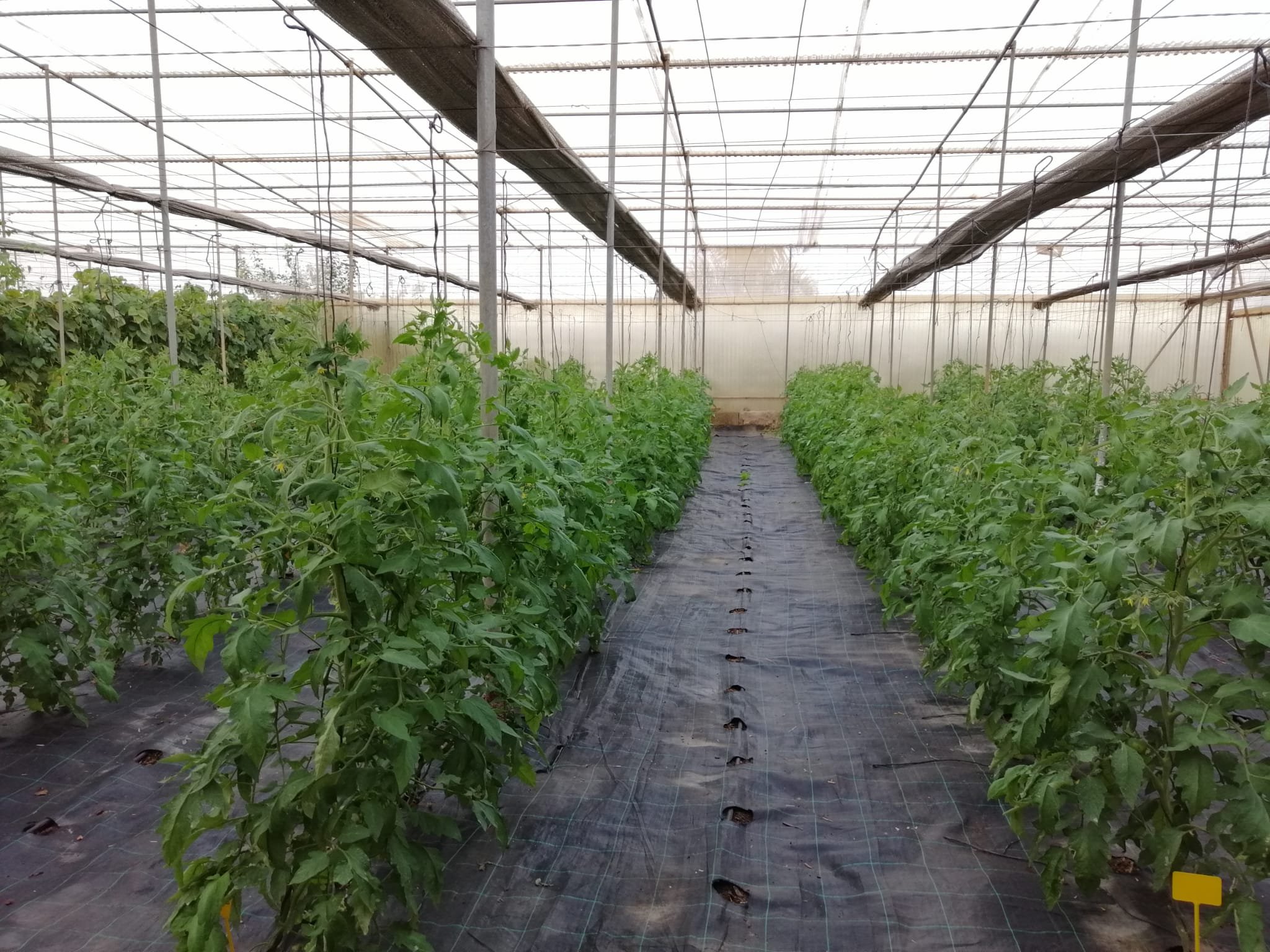
Tomatoes grown in salt brine hydroponic solution in the Canary islands

Professor David Jimenez Arias Plant Physiologist in the Canary Islands
Dr. Arias is a plant physiologist doing research on agriculture in the Canary Islands. The Canary Islands is in the Atlantic Ocean. It is a chain of 8 islands, approximately 1000 miles from the Spanish Mainland. Its economy is mainly tourism based. The Canary Islands operates more than 500 desalination plants. These plants produce large amounts of waste salt. As a means of using the salt waste, Dr. Arias has been doing experiments using the waste brine as a plant material in hydroponic green houses as it naturally contains minerals that farmers would otherwise have to import. Here is the interview we conducted
Why do you use salt brine in agriculture?
In my opinion, brine is a way to save money by using hydroponics. I think the brine can be used in tourist facilities and hydroponic farms, but the pilot plant is very important because one of the problems with working with salt can be the shelf life of the crops. We need to test them to use them in the local or export market.
Your experiments with brine mixed with certain fertilizers - after the brine is used once in solution. Can it be reworked into other experiments or does it pose another disposal problem?

Tomatos growing in brine from desalination plant on the Canary Islands
The idea is to work in a truly circular system. At the beginning there is the idea of working with plants that have a certain tolerance to salinity. These plants will remove some of the Na and Cl from the solution and then use this solution for a new plant with a lower tolerance to salinity. In our first manuscript we talk about using the surplus solution from the tomato hydroponics to irrigate the hotel grass. The main problem here is the need for a good evaporation system to provide enough water to dilute the rejected brine.
The world is suffering from a shortage of food following the Ukraine War do you see your efforts as having
An impact beyond the Canary Islands as a means of increasing vegetable production?
In my opinion, hydroponics is one of the best ways to increase production because we do not need agricultural soil, we can build a hydroponic farm on the roof or in abandoned buildings, we have enough space for it in our cities. Brine can be used to increase the exploitation revenues and shorten the payback time of the installations. With the right research, the incomes can be higher and make the use more sustainable.
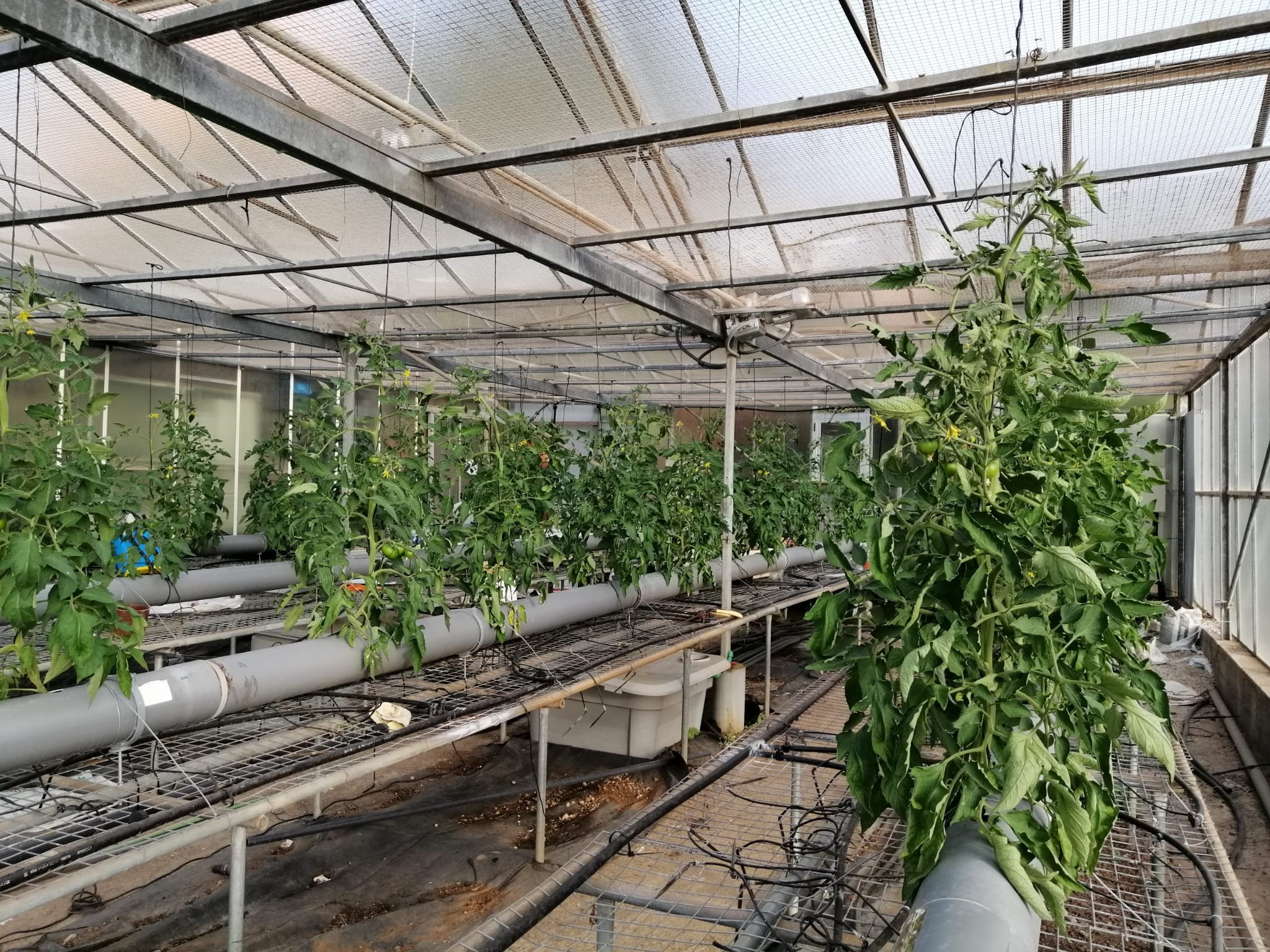
hydroponics in Brine Solution
What is the biggest challenge in using Brine?
In my opinion, the evaporator system is the bigger challenge. Most of the work is focused on evaporating seawater, but not so much on using rejected brine. We have some commercial systems that are interesting to use here, but we need a pilot plant to demonstrate the possibilities of discarded brine.
Can brine be used in higher value crops than tomatoes such as cannabis or cacao?
I think we can use the brine for other crops, but we need to test it in the system before it can be used on a large scale. Cocoa, for example, has a low tolerance to chlorine, which is a problem for this system. Cannabis can be interesting because it is worth noting how stress affects secondary metabolites such as cannabinoids. Studying how different stressors can change the amount of these compounds I think can be very important for the pharmaceutical industry. Another interesting area (my actual research area) is the application of bio stimulants. I have been working on an agent that can increase salt tolerance since 2010, and we can try to improve the response of plants with this kind of treatments.
As a plant Physiologist what direction would you see vegetable growing go? In the direction
Of hot houses and hydroponics or traditional field agriculture?
This is an interesting question. I am a proponent of hydroponic culture because it optimises water and fertiliser use and reduces the use of pesticides. From a plant physiological point of view, I think it is the best way to ensure proper plant nutrition and achieve better crop yields. For example, with a modern controlled hydroponic system like NFT, where the solution is circulated, one can achieve crop yields averaging 2.74 kg/plant. This can achieve a higher productivity of 161.8 ± 6.6 tonnes per hectare compared to 10.07 ± 0.4 tonnes in soil. I am not sure we need to change the whole agricultural system, but perhaps we can use hydroponics in cities to promote self-sufficiency among the population.
What are the principal lessons that have been learned from your experiments on the Canary island that are useful To places like Hawaii or any other island area?.
The most important lesson is that we have to think we are islands, with a limited space and a high population density. Waste management is one of the biggest problems that islands have to face. The circular economy is a necessity for us. I think we have to study all the waste we produce and try to transform it into new economic activities.
Is Geo-thermal the answer for Hawaii - An interview with Professor Floyd McCoy

Floyd McCoy Professor in Geology and Oceanography at the University of Hawai'i doing a sampling on Kilauea
Can we do geo thermal on Oahu?
Likely yes, but one must drill deep. It remains marginally economic to do so now but certainly not in the future.
Can we power the entire Island
The entire state…
What about Molokai, Lanai and other Islands
Wherever there is volcanism there is geothermal potential. One manifestation of volcanism are thermal (hot) springsl: Oahu -- in Kalama Valley (paved over by Henry J . Kaiser) = Ko’olau volcano; Molokai -- reputed to be near Papohaku Beach or thereabouts = Mauna Loa volcano; Lanai -- none that I know of; Maui -- mauka of Lahaina = West Maui volcano; perhaps near La Perouse Bay = Haleakala volcano; Big Is. — hot springs galore…
Plus Kilauea continues to erupt, Mauna Loa has been threatening new eruptive activity on-and-off for the past 2 decades, Hualalai -- erupted last in 1800/1801, Kohala — seems quiet, but Loihi seems plenty active. As for Kauai, it may have erupted in the 1950’s on the seafloor in the channel separating it from Oahu’s Kaena volcano.
What is keeping us from doing it?
Urgency is not quite here yet… it will come.
What steps are needed to do Georthermal on Oahu
The technology is highly developed all over the planet (Greece, Italy, Poland, Hungary, Turkey, Iceland, New Zealand, Japan, and more)
Is it dangerous healthwise to do geothermal in Hawaii
Current technologies such as used in Pahoa are sealed systems that do not release subsurface chemicals nor contaminate the ground water. Sulfides and carbon dioxide were released decades ago at the Puna facilities but trace amounts are trace amounts, and in comparison to natural sources such as fumaroles or eruptions what was released was negligible. H2S once was a problem with the old technology, which oxidized to produce really stinky stuff, but no longer with the new technology. These are minor straws — silly stuff -- used to discredit perhaps the most negligibly-polluting energy source on this planet … a gift from Pele (or from 'Aila’au depending upon your perspective of the last phase of the last eruption).

Floyd McCoy photo
What would you like the people of Hawaii to do to prepare for the future
Consider power generation from geothermal, OTEC, abyssal tidal currents over deep sea-floors of channels between islands, and solar (every rooftop in Hawaii should be paved with solar panels)
Is Technology the Answer to Increasing Water Availability in Hawaii

Hawaii Waterfall by Taylor Lagorio
By Taylor Lagorio - HPU 2023
The Hawaiian islands have always been blessed with abundant rainfall, which in turn has allowed for urbanization throughout the islands. Water is a necessity of life and does not go unmentioned when looking at how humans have come to develop areas, especially large cities. On Oahu specifically over 145 million gallons of water per day is pumped out and around the island to a population of about one million. Water is pumped into homes everyday and often people do not think about the implications that occurred for water to be delivered to their homes. Most water used for municipal use in Hawaii comes from groundwater that is recharged from rainfall. Over the past 40 years all of the Hawaiian islands, especially Oahu, have experienced a notable decrease in average rainfall since the 1980’s. The wet season for Hawaii, from November to April, is producing precipitation rates below average more often than average rates are occurring at this point. While the reason for this drying cannot be directly labeled as relating to climate, it is believed to be a vector of this issue. Now, Hawaii must figure out how to keep supplying it’s citizens with water in a climate that appears to be drying up.
Technology has been a leading advancement in mitigation of possible climate change related issues. One very interesting new technological advancement for water conservation is what is known as the WaterSeer, created by VICI Labs. This a machine that pulls moisture from the air by blowing wind into an underground chamber, where the wind will eventually condense and become water. The device would have an above ground section that is composed of a wind turbine for collecting the air and a pipe to transport the air underground. Once underground there is a collection chamber that would gather the water. The concept behind the collection of water is that the temperature difference between the hotter above ground part of the device and the cooler below ground collection chamber will condense the air to become water. Best of all because the water comes from the air there would be no need for filtration of harmful chemicals. Obtaining the water after collection is as simple as connecting a hose and pumping the water out. This a possible solution for Hawaii in locating a new source of water as average rainfall is decreasing. This device is made specifically to be used in semi-arid conditions where rainfall is not abundant. As Oahu is seeing less average rainfall every year, and the leeward side of the island already does not average as much rainfall as the windward side, the WaterSeer could be a potential water source in the future. The machine is supposed to be able to produce up to 11 gallons of water per day. If it were to be implemented in Hawaii the amount of water produced would have to be upscaled to meet the demand of the large population. The device is still in the early prototype stage of its life, so hopefully one day if the device is successful Hawaii can consider investing in some of the machines in order to assure water will always be available, even if climate change decreases the average rainfall.
WaterSeer Device
While looking for new sources of water is a prominent way that the state of Hawaii can mitigate water availability issues, there is always the solution of conserving what is already provided. Water conservation through reusage in itself can help to reduce overall water usage from sources. The acting of reusing water is not the most popular idea with most people of any given area. The idea of reusing sewage water especially, for potable water in households is all too often disregarded because the idea in itself just sounds too crazy. How can anyone expect somebody to drink water that was once sewage? While in simple terms it seems like too ambitious of an idea, water reusage really is not that crazy. One leading device capable of performing this feat in a way never imagined before is the Janicki Omni Processor, from Janicki Bioenergy. This machine is so unique because it is able to not only take solid human feces and turns it into clean drinkable water in as little as five minutes, but also creates energy and ash as well. Human feces become drinking water for communities, energy for other use in the community such as electricity, and ash that can be added to soil, all in one go. Another great selling point of the device is that it is not just prototype but an up and running machine that is available for use currently. A device like this could save Hawaii millions of dollars every year in cut sewage treatment costs, less water distribution costs, increased energy availability, and even soil enhancements. The Janicki Omni Processor can process up to 14 tons of human waste per day. While Oahu does treat over 100 million gallons a day of wastewater, diverting some of the waste to the Janicki Omni Processor could reduce overall effluent discharge levels. This device could be a very real answer to the water crisis that may soon be upon Hawaii.
Janicki Omni Processor
The future of Hawaii’s near water availability may look challenging , but the future of water saving technologies is looking bright. There are means to obtain water in ways never imagined before and ways to conserve water in almost unbelievable practices. Hawaii can survive a water crisis if investments are made in water saving technologies. The future water availability of Hawaii can remain plentiful with the right investments.
Works Cited
Kunkel, K.E. “State Climate Summaries 2022.” Hawai'i - State Climate Summaries 2022, 1 Jan. 1970, https://statesummaries.ncics.org/chapter/hi/.
“Overview.” Sedron Technologies, Sedron Technologies , 2022, https://www.sedron.com/janicki-omni-processor/overview/.
“WaterSeer.” Waterseer - the Index Project, The Index Project , 2017, https://theindexproject.org/award/nominees/1372.
An interview with Hermina Morita

Photo courtesy Hermina Morita
Former Kauai Representative Hermina Morita was the chairman of the Hawaii Public Utilities Commission from March 2011 to January 2015. She was one of the first political leaders calling for a transformation of Hawaii from an oil to a renewable economy. She was recently in Iceland – and attended our the RRH forum on carbon capture.

Former PUC Chair Hermina Morita - Photo Joel Guy
How was Iceland?
I went there to see the Northern Lights. Had I known about direct air capture, I would have tried to make arrangements to see the project.
How did you become interested in renewable energy?
Back in 1999, the first year I was the Chair of the House Energy & Environmental Protection Committee, I felt like I didn’t accomplish much because environmental program budgets were being cut back because of an economic downturn. I came away from that session thinking that if I am going to get the money we need for these programs I was going to have to fix the economy. The price of energy has a huge impact on Hawaii’s economy and one of the few ways to address cost and oil price volatility is the development of renewable sources to help stabilize energy pricing. That’s why I worked on introducing the concept of the renewable portfolio standard to create a market floor for renewables. Later, I was at a meeting and the former director of the CIA was sitting next to me and he said the biggest security threat is a worldwide shortage of water and oil. I agreed and it made me even more adamant about working on this issue.
What are your thoughts on the progress made in Hawaii over the last twenty years in renewable energy?
Until political leaders understand Hawaii’s energy transformation is a systemwide, multi prong approach and long-term commitment, simply approving a renewable project here and there is not going to cut it. Too much emphasis has been put on solar especially by not adjusting the tax credit when it was no longer necessary to subsidize, making it a windfall for some homeowners on the backs of other rate and taxpayers and being aware of the impacts on the grid. The needed short-term transitional solutions like replacing aging, inefficient generators with more efficient, flexible generators that could help control costs for the ratepayer and bring on more renewables and provide grid resiliency were drowned by soundbites like no new fossil fuel generators and 100% renewable. The reality is the first 40-60% of renewables reflects the low hanging fruit, getting to 100% will not be easy and will take a focused, concerted effort to maintain cost controls, reliability and resiliency.
Why has the experience on Kauai been so different from the rest of the state?
Leadership and risk management.
Now the world has become dependent on oil again because of Russia did you ever
expect that to happen?
I don’t think it’s “again,” we still are heavily dependent on oil - but it just makes me recall again what the former CIA director told me over 15 years ago, Putin’s war puts stark reality on fossil fuel’s grip on the world’s trajectory - whether we buy Russia’s oil and gas to fund Putin’s terror on humanity and dismantling of democracy or fail to move on climate change, we see the brutal impacts of a fossil fuel based economy.

What do you think about the future? Do you think that Hawaii should have an energy
mix that includes wood?
Hawaii should have a diverse renewable energy portfolio that includes biomass. The future certainly looks brighter with technologies like direct air capture and taking carbon dioxide via virtual pipelines to manufacture essential products that help reduce Hawaii imports and help boost other economic sectors.
What is the future for small islands like Lanai where you are from?
Small islands like Lanai should be the low hanging fruit to be fully powered by renewables by now. You have the island’s population located in two main areas and you have good solar, wind resources and storage technology. And, it should be a lot easier to integrate electricity into transportation. People don’t put very much mileage on cars so electric vehicle range is not a big issue.
Many Native Hawaiians have been against geothermal because they say it offends their
Native religious belief. Yet it is commonly done in New Zealand. Do you think people
in Hawaii can be more flexible towards geothermal if it is the choice between that and fossil fuels?
I think the biggest fear is the desecration of a potential geothermal resource site, therefore dishonoring and desecrating Pele. So a project would have to be done in a pono way for sure, to feel this is a gift and a way to honor Pele and how she blesses our lives with her power. But it’s not like we are totally unfamiliar with geothermal. We have the Puna Geothermal Venture experience to know its positive impact for Hawaii Island’s energy mix. We should also look to the Maori and Icelanders to understand how they live in concord with the use of geothermal resource. Like kanaka maoli, they also have a deep respect for nature, culture and their important deities.
How do you see Hawaii’s future. Are there things to be optimistic about?
In general, Hawaii’s future looks bleak , being overly dependent on the visitor sector and the lack of affordable housing and trained workforce. However, especially after the covid shutdown, there is a new found appreciation for our natural resources, quality of life and being self-sufficient. At least from my perspective, I am seeing my community (Kauai)saying we have capacity limits and stepping up to improve the quality of a visitor’s visit not numbers. Another bright spot is the variety of locally sourced vegetables and meats now available.