A Brief History of Resilience Hubs In Hawai’i by Mike Markrich
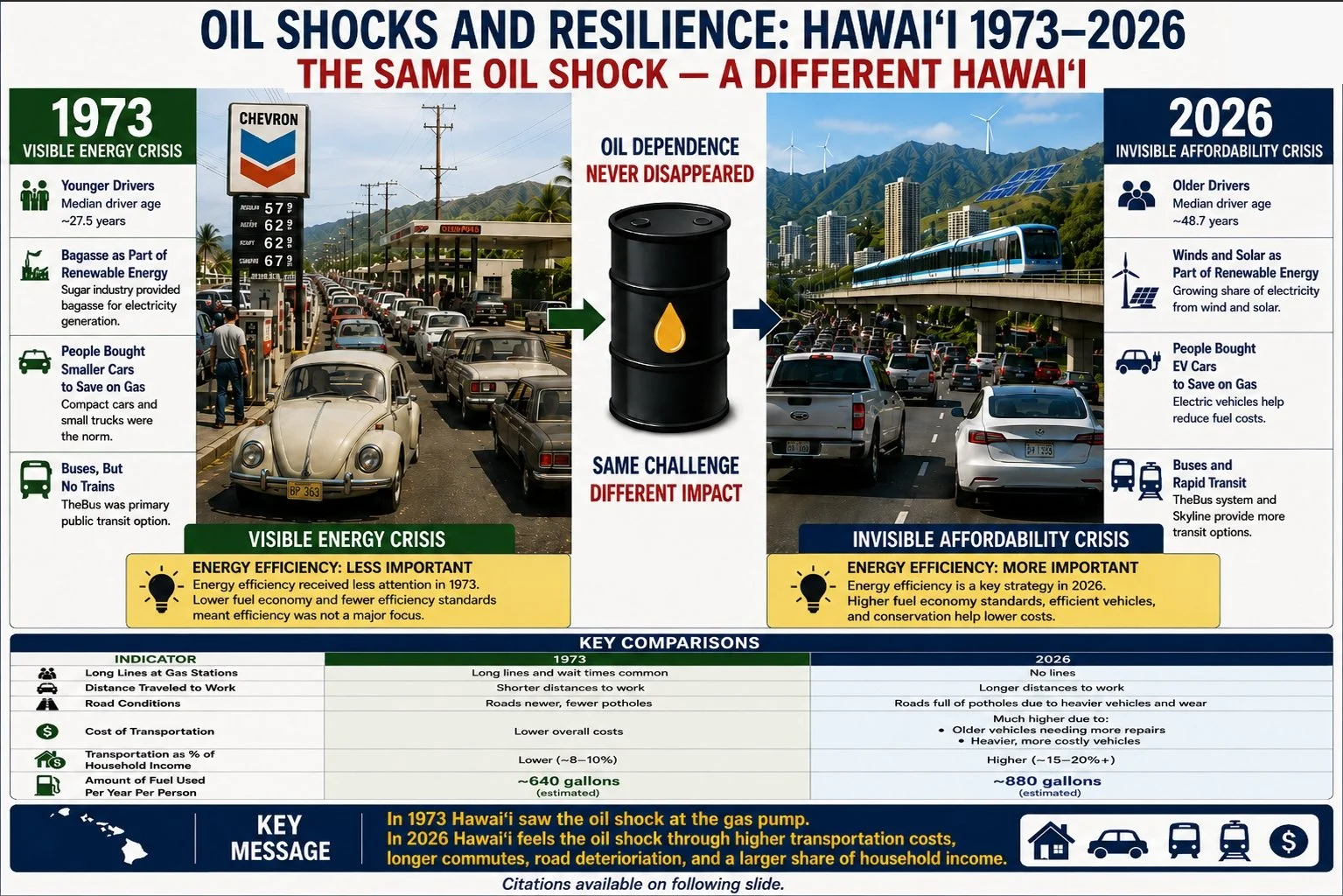
One of the great differences between 1973 and 2026 is that when there was a natural disaster neighborhoods were largely on their own. People depended on government or businesses such as plantations or churches but there was no organized systematic means for people to get help and help each other. Today we have Resilience Hubs which will be the subject of a special forum on July 30 at the Foreign Trade Zone Auditorium sponsored by RENEW REBUILD HAWAII the American Planners Association Hawaii Chapter and the Hawaii Green Infrastructure Authority
The concept of Resilience Hubs emerged in the United States during the 2010s in Baltimore after a combination of mass power outages coincided with an extreme heat wave that caused deaths and heat strokes in numbers that overwhelmed the local government. From that point forward rather than relying solely on government emergency response, resilience hubs emerged that help neighborhoods prepare before disasters, respond during emergencies, and recover afterward.
In Hawaiʻi, the idea took hold following a series of major crises, including the 2018 Kīlauea eruption on Hawaiʻi Island and the COVID-19 pandemic beginning in 2020. These events brought forth local leaders who in the absence of centralized direction created their own responses to help their communities.
One of those leaders was Janice Ikeda, who seeing the chaos and disruption that occurred following the COVID - Pandemic, became the state's leading grassroots organizer writing grants and developing resilience hubs. During the pandemic, Ikeda raised funds, organized neighborhood-based hubs that coordinated food distribution, volunteer networks, emergency communications, mental health support, and assistance for vulnerable residents. Rather than creating new government facilities, Vibrant Hawaiʻi built on existing schools, churches, community centers, and local organizations, creating a network of trusted community gathering places.
At the same time, the City and County of Honolulu Office of Climate Change, Sustainability and Resiliency incorporated resilience hubs into its Ola: Oʻahu Resilience Strategy through Action 15, which called for creating a network of community resilience hubs across Oʻahu. Beginning in 2022, the City partnered with the Center for Resilient Neighborhoods (CERENE) to conduct extensive public engagement, identifying potential hub locations and developing a Hawaiʻi-specific definition of resilience hubs based on community priorities. More than 3,000 residents participated in surveys and workshops during the Action 15 project.
Funding for Hawaiʻi's resilience hub movement has come from a combination of philanthropic organizations, government grants, private companies, and nonprofit partners. Organizations such as Hawaiian Electric, State Farm, local foundations, federal disaster programs, and county governments have supported various training, planning, and community preparedness initiatives. The approach emphasizes investing in people, local leadership, and trusted relationships rather than constructing expensive new facilities.
Today, Hawaiʻi's resilience hub network continues to expand. Hawaiʻi Island now has a network of approximately 20 community hubs, while Oʻahu is developing regional hub networks such as the Koʻolau Resilience Hub Network. Modern resilience hubs provide emergency preparedness training, communications, food security programs, first aid, psychological support, volunteer coordination, and neighborhood planning year-round—not just during disasters.
The long-term vision is that resilience hubs become an essential complement to Civil Defense and emergency management. Rather than replacing government agencies, they strengthen neighborhood self-reliance, improve communication between communities and emergency responders, and help Hawaiʻi recover more quickly from hurricanes, wildfires, tsunamis, volcanic eruptions, pandemics, and other future emergencies.